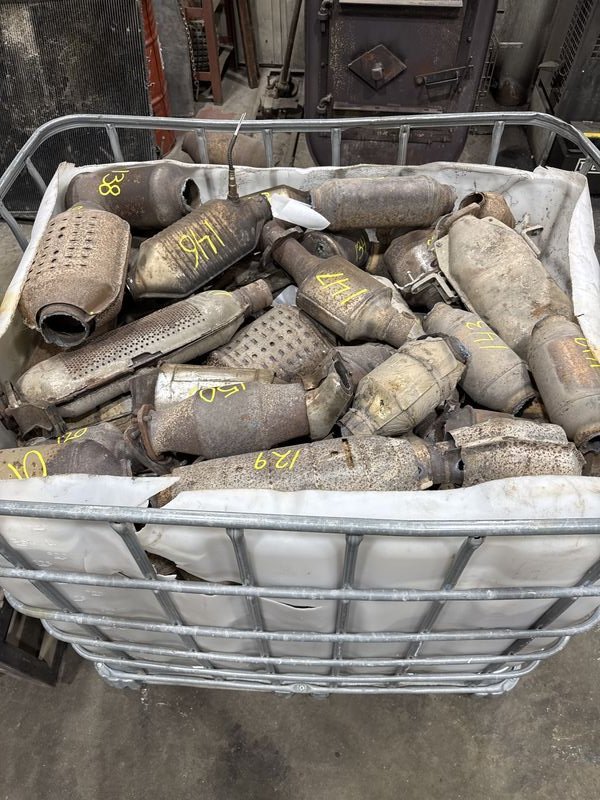
What's Actually Inside a Catalytic Converter — and Why Recyclers Want It
Most people are surprised to learn that a single catalytic converter can be worth anywhere from a few dollars to several hundred dollars as scrap. That's not a typo. The swing in value comes down to what's inside — and understanding that range is the difference between getting a fair price and leaving serious money on the table. If you're looking to sell scrap metal Markham, catalytic converters are one of the highest-value items you can bring in — if you know what you're dealing with.
Inside every catalytic converter is a ceramic or metallic substrate coated with platinum group metals (PGMs): platinum, palladium, and rhodium. These are rare. They're mined in limited quantities, mostly in South Africa and Russia, and the global supply is tight. Recycling converters is one of the few ways the market can recover these metals outside of new mining. That's what drives demand — and that's why prices can change week to week based on commodity markets.
Why Catalytic Converter Scrap Prices Vary So Much
If you've ever called around to scrap yards and gotten wildly different quotes on the same converter, you're not imagining things. Prices vary for real, legitimate reasons — and a few not-so-legitimate ones.
The honest reasons come down to three factors:
- PGM spot prices: Platinum, palladium, and rhodium trade on commodity markets daily. When palladium spikes, converter values go up. When rhodium drops — and it has dropped hard from its historic highs — prices follow. Scrap metal prices today reflect those swings directly.
- Converter type and vehicle application: A converter from a late-model domestic pickup truck contains different PGM concentrations than one from a small foreign sedan. High-load diesel converters and aftermarket units often contain far less precious metal than OEM converters from larger engine vehicles.
- Condition and completeness: Cracked, broken, or "degreened" (spent) converters yield less on assay. A converter that's been rattling around a yard for five years isn't the same as one that came off a running vehicle last week.
Then there's the less legitimate side: some buyers lowball because they know most sellers don't know what they have. That information gap is exactly what platforms like sell your scrap metal on SMASH Recycling are designed to close. When multiple vetted buyers compete for your load, you're not guessing. You're discovering the actual market price.
How the Catalytic Converter Recycling Process Actually Works
Understanding the process helps you understand the pricing. It also helps you ask better questions when you walk into a scrap yard — or list a load on an auction platform.
Here's the general flow from converter to recovered metal:
- Collection and identification: Converters are sorted by serial number, make, model, and application. Experienced buyers identify converter types using databases that correlate VIN and serial data with known PGM yields. This is why serial number tracking matters — it's not bureaucracy, it's valuation.
- Decanning: The outer steel shell is cut open to extract the ceramic or metallic substrate inside. The steel shell itself has scrap value, but it's minimal compared to what's inside.
- Sampling and assay: The substrate is crushed, homogenized, and sampled. A lab assay determines the actual concentration of platinum, palladium, and rhodium. This is the ground truth — everything else before this point is an estimate.
- Smelting and refining: The sampled material goes to a PGM refinery where metals are extracted through high-temperature smelting and chemical processes.
- Settlement: The refinery reports back actual yields. Final payment to the upstream buyer is based on actual assay, minus processing fees and the refinery's cut.
Most sellers never see steps 3 through 5 — they deal with a middleman who quotes a per-unit or per-pound price based on their own estimates of what the converter will yield. The accuracy of that estimate, and how honest the buyer is about their margin, is what separates a fair deal from a bad one.
Selling Catalytic Converters in Markham — What Local Sellers Should Know
If you're in Markham or anywhere in the Greater Toronto Area, you're in a region with real recycling infrastructure. Ontario has active scrap dealers, processors, and metal recyclers serving both residential and commercial sellers. But more infrastructure doesn't automatically mean better prices. It means more options — and options are only useful if you know how to compare them.
In Ontario, regulations around catalytic converter sales have tightened in recent years, reflecting national trends toward reducing converter theft. If you're selling converters in volume — say, from a vehicle dismantling operation, a fleet shop, or a recycling yard — you'll need to document the source. That means bills of lading, purchase records, or vehicle titles depending on the volume and circumstances. This isn't just paperwork. It's what separates legitimate recyclers from those who move stolen parts. Buyers who don't ask questions aren't doing you a favour — they're a liability.
When you sell your scrap metal in Canada on GetMyScrap, documentation is built into the process. Photo records, serial tracking, and transparent transaction histories protect both sides. If you're sitting on a load of converters from a legitimate source, that paper trail is what gets you top dollar — because a documented load is a lower-risk load for buyers, and lower risk means better offers.
How Aluminum and Other Non-Ferrous Scrap Fit Into the Same Load
Catalytic converters rarely come alone. If you're pulling converters off vehicles, you're also dealing with aluminum wheels, radiators, wiring harnesses, and engine components. Understanding how to value the whole load matters — not just the converters.
Aluminum scrap price today is influenced by London Metal Exchange (LME) spot prices, alloy grade, and whether the aluminum is clean or contaminated. A clean cast aluminum wheel gets a better rate than shredded mixed aluminum with paint, rubber, or steel inserts. Sorting matters. A yard that accepts everything in one bin and pays you a blended rate is not giving you what your cleaner material is worth.
The same principle applies across your load. Scrap copper, scrap aluminum, and catalytic converters all have separate markets. Selling them together to a single buyer who doesn't break out pricing by material type is often leaving value behind. The better approach — whether you're a residential seller in Markham or a commercial yard operator in Ontario — is to know what you have before you sell it.
Platforms like SMASH are built around this logic. Inventory documentation, photo records, and material categorization aren't red tape. They're what make competitive pricing possible. When a buyer can see exactly what's in the load, they can bid more confidently — and that confidence flows back to you as a better offer. Explore Canadian scrap metal guides to learn how to sort and document loads for maximum value.
Getting the Best Price: What Sellers in Markham Can Do Right Now
Whether you have three converters from a home garage project or a pallet of mixed non-ferrous material from a commercial job, the steps to getting a fair price are the same.
- Document before you sell. Photograph your converters, note the serial numbers if visible, and keep any source paperwork (vehicle records, receipts). This speeds up the sale and supports better offers.
- Don't settle for the first quote. Call two or three buyers, or better yet, list on a platform where buyers compete. One phone call to one yard is the old way. Competition reveals the real market price.
- Sort your material. Separate converters from aluminum, steel, and copper. Mixed loads get mixed prices. Clean loads get better prices.
- Know the difference between per-unit and per-pound pricing. Some buyers quote per unit (per converter), others quote per pound of total material. Neither is inherently better — but you need to compare apples to apples.
- Check current rates. Scrap metal prices today fluctuate with commodity markets. A rate you got quoted last month may not reflect what the market will bear today.
Disclaimer: Scrap metal prices — including catalytic converter values and aluminum scrap price today — fluctuate based on commodity markets, material grade, and buyer demand. Always check current rates before selling. The price ranges referenced in this article are general illustrations, not current market guarantees.
If you're ready to stop guessing and start getting competitive offers, get a fair price for your scrap today — whether you're clearing a garage in Markham, winding down a dismantling operation, or moving a commercial load anywhere in Canada. GetMyScrap connects sellers with buyers who are ready to compete for your material, not just offer you whatever number comes to mind.
The scrap industry runs on information. The more you have — about your material, about the market, about your options — the better your outcome. That's true whether you're selling a single converter or a trailer load of non-ferrous metal.
Frequently Asked Questions
Q: How do I sell scrap metal in Markham, Ontario?
You can bring material to a local scrap yard or use an online platform to get competitive offers without leaving your location. For larger loads or higher-value material like catalytic converters, platforms that bring multiple buyers to your listing typically produce better results than a single yard quote. Make sure you have documentation ready — especially for regulated materials like converters.
Q: Why is my catalytic converter worth so much — or so little?
The value is almost entirely driven by the platinum group metals (PGMs) inside — platinum, palladium, and rhodium. The converter's vehicle application, age, condition, and whether the substrate is intact all affect the assay yield. PGM spot prices also shift constantly, so a converter worth a certain amount this week may be valued differently next month.
Q: Is there a scrap yard near me open Sunday in Markham?
Some scrap yards in the Markham and Greater Toronto Area operate on limited Sunday hours, but availability varies by facility. Call ahead or check listings before making a trip — hours can change seasonally. If you're working with a pickup-based service, scheduling flexibility is often better than relying on walk-in yard hours.
Q: Do I need ID or paperwork to sell catalytic converters in Ontario?
Yes. Ontario regulations and responsible buyer policies require sellers to provide documentation for catalytic converter transactions, particularly for commercial volumes. This typically includes proof of vehicle ownership or source documentation. Legitimate buyers will ask — and that's a sign you're dealing with someone reputable.
Q: What's the difference between selling scrap aluminum and selling a catalytic converter?
Scrap aluminum is priced by weight and alloy grade, tied to LME commodity pricing. Catalytic converters are priced based on their PGM content, which requires identification and sometimes assay to value accurately. They're both non-ferrous, but they trade in completely different markets and the valuation process is different. Sort them separately and get separate quotes.
Stay current on scrap metal market trends and industry news by following SMASH on LinkedIn — useful updates for anyone buying or selling scrap metal across North America.