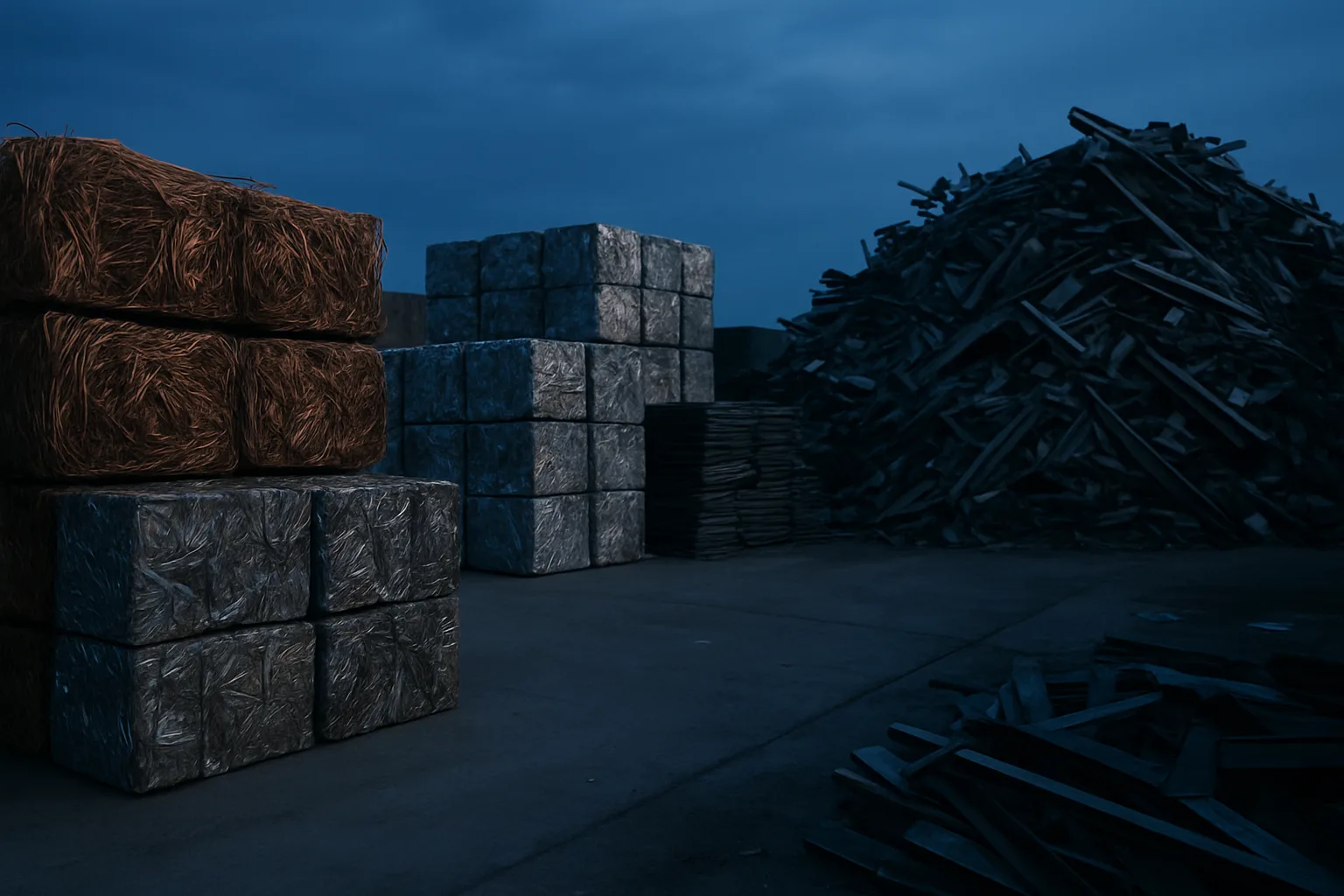
Steel vs. Iron Scrap: What's the Price Difference and Why Does It Matter?
Most people assume all metal scrap pays roughly the same. It doesn't. The gap between what a yard pays for iron versus prepared steel can swing your payout significantly — and if you're hauling loads in Thunder Bay without knowing the difference, you're likely leaving money on the table.
While copper scrap price today tends to grab headlines in the metals market, ferrous metals like steel and iron move in massive volumes across Canada and quietly drive the economics of most scrap yards. Understanding how they're priced — and why the spread exists — helps you sort smarter, load better, and negotiate from a position of knowledge rather than guesswork.
Iron vs. Steel: Not the Same Material, Not the Same Price
Here's where a lot of people get tripped up. Iron and steel are related but distinct. Cast iron — think engine blocks, old radiators, heavy machinery parts — has a high carbon content and is brittle. Steel is an alloy of iron with lower carbon and often other elements, making it stronger and more workable. Yards treat them differently because mills treat them differently.
Cast iron typically fetches a lower price per pound than steel because it's harder to process and has a narrower set of uses in the secondary market. Heavy melting steel (HMS), on the other hand, commands a better price because it's more versatile as a feedstock. Prepared steel — cut to spec, free of contaminants, sorted — will always price above unprepared or mixed loads.
- Cast iron (engine blocks, radiators, stove parts): lower price per pound, often priced by the ton
- Heavy melting steel #1 (HMS1): clean, uncoated, thicker gauge — commands a premium
- Heavy melting steel #2 (HMS2): thinner gauge, may include light gauge sheet — priced below HMS1
- Busheling / Bundles: clean factory steel, often the highest-priced ferrous category
- Mixed or contaminated steel: lowest ferrous price — yards penalize heavily for contamination
In Ontario yards, including those servicing the Thunder Bay region, the spread between clean HMS1 and mixed iron can be meaningful on a per-ton basis. If you're loading a trailer without sorting, you're getting paid at the bottom of that range.
How Steel and Iron Prices Move — and What Drives Them
Ferrous scrap prices don't move in isolation. They track global steel production demand, domestic mill activity, and export flows — particularly to Asia, where electric arc furnace mills consume enormous volumes of scrap. When North American mills are running hot, demand for HMS and prepared steel rises, and prices follow. When mills idle or cut capacity, prices fall fast.
As of July 2026, North American steel markets remain sensitive to ongoing shifts in trade policy and mill utilization rates. Domestic demand from construction and manufacturing has held relatively steady, but export pricing pressure continues to create volatility. Always check current rates directly with your yard or through a platform like Canada's B2B scrap recycling marketplace before committing to a sale — published indices and spot market prices can diverge significantly from what any single buyer is offering on a given week.
Iron follows a similar pattern but with less elasticity. Because cast iron has fewer applications in modern steelmaking, it's more of a commodity of opportunity. Prices move, but the ceiling is lower.
Where Copper Scrap Price Today Fits Into Your Mixed-Load Strategy
If you're pulling apart industrial equipment, HVAC systems, old vehicles, or electrical infrastructure, your load is almost never purely ferrous. You'll have non-ferrous mixed in — copper wiring, aluminum brackets, brass fittings. These materials need to be stripped and sorted before the load hits the scale, because co-mingling them with steel doesn't get you the non-ferrous rate. It gets buried.
The copper scrap price today is substantially higher per pound than any steel or iron grade — typically by a factor of several times over. Pulling copper out of a mixed steel load before you sell isn't optional if you want to be paid fairly. The same logic applies to aluminum. A few pounds of copper wire left inside a steel enclosure won't get you copper money — it'll get averaged into the steel price, which is a significant loss.
This is exactly why platforms like SMASH exist. When you're dealing with mixed loads or trying to maximize recovery across ferrous and non-ferrous categories, having vetted buyers compete for your material — rather than accepting one yard's mixed-load average — creates real price discovery. More buyers, more competition, better outcome. That's the mechanic.
If you want to get a fair price for your scrap today, sorting is the first step. Documentation is the second. Competitive bids are the third.
Sorting Scrap in Thunder Bay: What Local Sellers Need to Know
Thunder Bay has a working industrial base — forestry equipment, mining machinery, transportation fleets. That means local scrap streams often include heavy cast iron, structural steel, and complex mixed-metal assemblies. Sellers here have real volume to work with, but volume without sorting is still volume priced at the bottom.
If you're a contractor, fleet operator, or yard working in the Thunder Bay area, a few sorting habits pay dividends every single time:
- Separate cast iron from steel before the load is built. Don't mix engine blocks with structural steel. You'll price one or the other — usually the lower.
- Strip non-ferrous before weighing. Copper, aluminum, and brass should never ride along with HMS.
- Know your gauge. Thin sheet steel (under 1/4 inch) may land in HMS2 territory regardless of how clean it is. Thick structural steel is HMS1. Bundling mixed gauges costs you.
- Document what you have. Photo documentation of sorted loads gives remote buyers confidence. This matters especially for larger lots where a buyer can't physically inspect before bidding.
- Ask about preparation specs before you load. Different buyers have different requirements for cut sizes and bundling. Meeting a buyer's spec often unlocks a better price.
For Thunder Bay scrap metal services, sorting and documentation aren't just good practice — they're the difference between a yard quoting you their floor price and a buyer competing at market.
Aluminum Recycle Value and How It Compares to Ferrous
While steel and iron dominate by volume in most industrial scrap streams, aluminum recycle value punches well above its weight on a per-pound basis. Aluminum sits between ferrous metals and copper in the pricing hierarchy — significantly above steel, well below copper, and highly dependent on alloy and condition.
In Ontario, aluminum from automotive sources (wheels, engine components), construction (extrusions, window frames), and industrial equipment all grade differently. Clean cast aluminum prices above mixed or contaminated material. Painted or coated aluminum faces deductions. Aluminum cans — while highly recyclable — are priced at commodity rates well below cast or extrusion grades.
If your scrap stream includes aluminum alongside steel and iron, scrap metal recycling Canada-wide platforms like SMASH let buyers see and bid on each material category separately rather than bundling everything into a blended average. That's meaningful money when you're dealing with any volume above a few hundred pounds.
Want to understand how non-ferrous values interact with your ferrous loads? Explore Canadian scrap metal guides for practical breakdowns across material categories.
How to Sell Smarter Across All Metal Categories
Whether you're focused on steel, iron, copper, or aluminum, the fundamentals of getting a better price don't change. Sort. Document. Compete. The single-buyer, one-phone-call model leaves value behind — not because any yard is necessarily dishonest, but because one bid is never the market.
Platforms built for scrap metal recycling Canada-wide reach — like SMASH — give sellers access to vetted buyers across North America. No subscription fees. No commitment to a single buyer. The auction format creates the competition that individual negotiations almost never produce.
If you're in Thunder Bay or anywhere in Ontario, the logistics of sell scrap metal near me for cash searches often lead you to the nearest yard, which is fine for small loads. But for anything substantial — a full trailer of HMS, a pallet of non-ferrous, a batch of catalytic converters — the geography of your nearest yard shouldn't set your price ceiling.
Ready to stop guessing what your scrap is worth? Sell your scrap metal in Canada on GetMyScrap and find out what competitive buyers will actually pay for your material today. Getting a fair price for your scrap starts with giving more than one buyer the chance to earn your load — request a pickup at getmyscrap.ca and see the difference competition makes.
Frequently Asked Questions
Q: Why is the copper scrap price today so much higher than steel or iron?
Copper is a non-ferrous metal with significantly higher industrial demand relative to its supply in the scrap stream. It's used in electrical systems, plumbing, electronics, and manufacturing — industries where there's no easy substitute. Steel and iron are abundant and trade in massive volumes, which keeps their per-pound price far lower. Always check current copper rates before selling, as they fluctuate daily with commodity markets.
Q: Can I sell mixed iron and steel together at a Thunder Bay scrap yard?
Yes, most yards in Thunder Bay will accept mixed ferrous loads — but you'll be paid at the lower of the two grades, or at a blended mixed-metal rate. Sorting cast iron from prepared steel before you sell almost always yields a better total payout, especially on larger loads. The extra sorting time is usually worth it.
Q: How does aluminum recycle value compare to steel in Canada right now?
Aluminum consistently prices higher per pound than any steel or iron grade across Canada. The exact spread depends on alloy, condition, and current market pricing — but clean cast or extrusion aluminum can be worth several times what HMS steel fetches per pound. Never blend aluminum into a steel load. Strip it, sort it, and sell it separately.
Q: What's the best way to sell scrap metal in Thunder Bay for the most cash?
Sort your materials by type before the sale — separate ferrous from non-ferrous, and sort by grade within each category. Document your load with photos. Then use a platform that gives multiple vetted buyers a chance to bid rather than accepting a single yard's offer. SMASH connects sellers across Ontario and beyond with buyers competing for material, which creates real price discovery rather than a take-it-or-leave-it quote.
Q: Do I need to prepare or cut steel scrap before selling it?
Preparation requirements vary by buyer and grade. HMS1 typically requires material to be under a certain length — often 5 feet — and free of attachments like wood, concrete, or plastic. Meeting a buyer's spec unlocks the better price; uncut or contaminated material often defaults to HMS2 or mixed pricing. Always confirm prep requirements before loading if you want the premium grade rate.
Prices for copper, steel, iron, aluminum, and all scrap metals fluctuate based on market conditions. The information in this article reflects general market dynamics as of July 2026. Always verify current rates with your buyer or platform before completing a sale.
Stay current on scrap metal market movements and recycling industry news — follow SMASH on LinkedIn at linkedin.com/company/scrap-metal-auction-sales-hub for regular updates and insights from across North America's scrap industry.