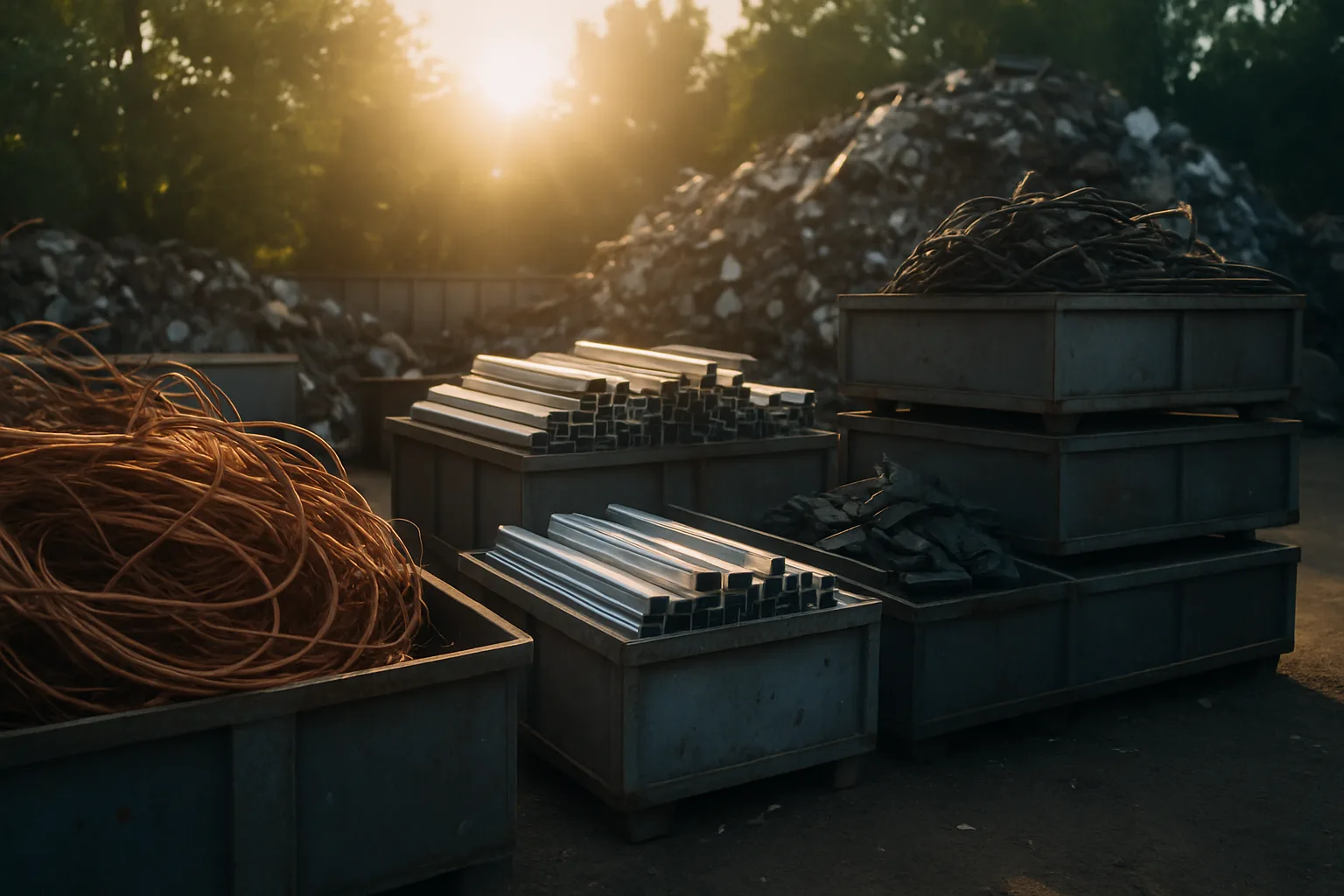
What's Really Inside Your Old Electronics — And Why It Matters for Scrap Metal Recycling in Kelowna
Your old laptop isn't just electronic waste. It's a circuit board layered with copper, gold, silver, and palladium — recoverable metals that have real market value right now. Most people toss electronics in a bin and never think about what they're leaving behind. If you're tracking the copper scrap price today, you already know how much that matters.
E-waste is one of the fastest-growing waste streams in Canada, and British Columbia generates a significant share of it. The challenge isn't just disposal — it's knowing which devices hold recoverable metal value, how to extract that value legally and safely, and where to sell it. That's what this guide covers.
Which Old Electronics Actually Contain Valuable Scrap Metal?
Not all e-waste is equal. Some devices are packed with recoverable metals. Others are mostly plastic. Knowing the difference saves you time and gets you closer to a fair return.
Here's where the real metal value hides in common electronics:
- Desktop computers and servers: Heavy copper in power supplies and motherboard traces, aluminum heat sinks, steel chassis. Servers carry more precious metal content per unit than consumer desktops.
- Laptops: Smaller format but still contain copper wiring, small amounts of gold on CPU pins and connectors, and aluminum in the casing.
- Smartphones: Pound for pound, smartphones are among the most metal-dense devices. Gold, silver, copper, and palladium all appear in trace amounts — but volume matters when you're processing in bulk.
- CRT monitors and televisions: Lead-heavy glass (which requires special handling), but copper coils in the yoke assembly are recoverable.
- Printers and photocopiers: Copper motors, aluminum frames, and steel components. Not glamorous, but the weight adds up.
- Power cables and wiring: Straight copper wire — one of the cleanest sources of scrap copper in any load of e-waste.
The general rule: the older the device, the more recoverable metal it tends to contain. Manufacturing trends over the past decade have moved toward miniaturization and material substitution, which reduces precious metal content per unit. Older servers, desktop towers, and industrial electronics from the 1990s and 2000s are particularly rich sources.
Copper Is the Backbone of E-Waste Recovery — What That Means for Scrap Metal Recycling in Kelowna
Copper shows up everywhere in electronics. Power cables, printed circuit board traces, transformer windings, motor coils — copper is the primary conductor in virtually every electronic device ever made. That's why the copper scrap price today is the benchmark price that most e-waste recyclers watch closely.
Copper prices move with global commodity markets, and they've been volatile. Supply disruptions, energy transition demand (electric vehicles, grid infrastructure, solar), and geopolitical factors all push the price in different directions. When copper prices rise, the math on stripping and sorting e-waste gets more favorable. When prices dip, volume and efficiency matter more.
In Kelowna specifically, scrap metal recycling operations handle a mix of residential e-waste drop-offs and commercial loads from businesses cycling out IT equipment. If you're sitting on a pallet of old office computers, decommissioned telecom gear, or a stack of routers and switches, that's a load worth pricing properly — not just donating or landfilling. Kelowna scrap metal services can help you understand what your load is actually worth before you move it.
One note worth making: secondary keywords like "copper scrap price today Ahmedabad" or "how to sell scrap metal UK" reflect global search interest in this topic, but if you're in British Columbia, the market prices and regulations that apply to you are North American — and specifically Canadian. Always price your material against local buyers, not offshore benchmarks.
Precious Metals in Electronics: Gold, Silver, Palladium, and Why They're Harder to Recover
Gold gets most of the attention when people talk about precious metals in electronics. And yes, gold is present — but the quantities per device are small. You're not melting down a smartphone and finding a gold nugget. The value is real but it requires either significant volume or a specialized refinery to extract economically.
Here's a practical breakdown of precious metals in common e-waste:
- Gold: Found on CPU pins, edge connectors, SIM card contacts, and plated connector pins. High-grade computer boards (older server boards, telecom switching equipment) carry more gold per kilogram than consumer devices.
- Silver: Used in solder, keyboard contacts, and some switch contacts. Silver content is spread throughout most circuit boards in small amounts.
- Palladium: Found in ceramic capacitors — particularly in older boards. Palladium prices have been strong in recent years due to its use in catalytic converters (for gasoline engines), making older electronics more valuable to specialized refiners.
- Platinum: Less common in electronics than in catalytic converters, but present in some specialized industrial electronics and hard drive components.
The catch with precious metal recovery is that extracting it properly requires chemical processing — typically hydrometallurgical or pyrometallurgical methods — that's not available to the average yard or individual seller. What you can do is sort your material correctly so it reaches a buyer or refinery that pays for precious metal content. A catalytic converter buyer or a specialized e-waste processor will pay more for sorted, graded boards than a general yard pays for mixed e-waste.
Platforms like SMASH bring competitive bidding to loads that have real metal content — including electronics with documented specs. When buyers compete for your material rather than taking it at a posted price, you get actual price discovery instead of a guess. You can learn more about how that auction model works at smashrecycling.ca.
How to Prepare and Sell E-Waste for Maximum Scrap Value in Canada
Most people undersell e-waste because they don't sort it. Mixed loads get priced at the lowest common denominator. If you take ten minutes to separate material by type, you often unlock meaningfully better pricing — especially when you're dealing with buyers who pay based on metal content rather than weight alone.
Follow this process to get more out of your old electronics:
- Separate wire from boards from steel. Copper wire, circuit boards, steel chassis, and aluminum heat sinks are all different materials. Mixed together, they price lower. Separated, each category gets its proper value.
- Pull power supplies. Desktop and server power supplies contain dense copper windings and transformer cores. They're easy to remove and worth sorting out.
- Grade your boards. High-grade boards (server motherboards, telecom equipment) are worth more per kilogram than low-grade boards (consumer electronics, printers). If you can sort by grade, do it.
- Document your load. Weight, description, quantity of units, any serial or model numbers for notable equipment. Documentation gives buyers confidence and reduces the back-and-forth that drags out a sale.
- Know the regulations. In British Columbia, certain e-waste materials — particularly CRT glass and batteries — require handling under specific environmental protocols. Make sure your disposal path is compliant before you move the material.
If you're selling in volume, don't settle for one phone call to one buyer. The copper scrap price today may be strong, but a single buyer quoting you a lump sum on a mixed e-waste pallet doesn't reflect what that load is actually worth on a competitive market. SMASH's auction model exists precisely for this scenario — documented loads, vetted buyers, competitive bids.
Ready to find out what your scrap is worth? Sell your scrap metal in Canada on GetMyScrap and get connected with buyers who pay based on actual market pricing.
Environmental Responsibility and Compliance for Scrap Metal Recycling Canada
E-waste isn't just a commodity play. There's a real environmental dimension to how you handle it. Electronics contain hazardous materials — lead solder, mercury in older LCD backlights, cadmium in some battery types, and brominated flame retardants in plastics. Handling these materials improperly creates liability and environmental harm.
In Canada, provincial regulations govern e-waste disposal. British Columbia has one of the more established extended producer responsibility (EPR) frameworks in the country, and Kelowna residents and businesses have access to registered drop-off and recycling facilities for regulated materials. For commercial quantities, working with a licensed recycler or certified e-waste processor is both the legal requirement and the practical path to maximum recovery value.
The environmental and financial cases here align: properly processed e-waste recovers more material, more completely, with less loss. A recycler who handles material correctly also tends to be the recycler who pays more accurately for what's in the load. Cut corners on compliance and you usually end up with less value and more risk.
If you want to get a fair price for your scrap today while staying on the right side of provincial environmental requirements, start by working with buyers who operate transparently and document the transaction. That's not just good practice — in 2026, it's increasingly expected.
For more guidance on navigating the Canadian scrap market, explore Canadian scrap metal guides that cover everything from pricing to compliance to maximizing your load value.
Frequently Asked Questions
Q: What is the copper scrap price today in Kelowna, British Columbia?
Copper scrap prices change daily based on commodity markets. The price you'll receive in Kelowna depends on the grade of copper (bare bright wire vs. #1 vs. #2 vs. insulated), the quantity, and the buyer you're dealing with. Check with local yards or use a platform like SMASH to get competitive bids rather than relying on a single posted rate. Prices are always subject to fluctuation — what's accurate today may shift by tomorrow.
Q: Is the copper scrap price in Canada different from prices in other countries like the UK or India?
Yes. Copper is a globally traded commodity, so the base metal price is set on international exchanges, but what you actually receive at a Canadian yard reflects local market conditions, grade adjustments, and buyer margins. References to "copper scrap price today Ahmedabad" or "how to sell scrap metal UK" reflect different markets with different logistics, currency, and regulatory contexts. If you're in Canada, price your material against Canadian buyers.
Q: Can I scrap old smartphones and laptops for metal value in Canada?
Yes, but the value depends heavily on volume and how the material is processed. Individual devices contain small amounts of copper, gold, and silver — meaningful in aggregate but not worth much as a single unit. If you have bulk quantities (IT asset disposals, business equipment upgrades), sorting by grade and working with a specialized e-waste buyer or auction platform will get you closer to actual market value for the metal content.
Q: Are there regulations around scrapping electronics in British Columbia?
Yes. British Columbia operates under an extended producer responsibility framework that governs how certain electronics must be handled at end of life. Regulated materials like CRT monitors, batteries, and items containing hazardous components must go through approved channels. For individuals, this often means registered drop-off points. For businesses processing larger volumes, working with a licensed recycler is both the compliant and most economically sound approach.
Q: How does SMASH help with selling e-waste and scrap metal in Canada?
SMASH is an auction platform that connects sellers with vetted buyers across North America. Instead of calling one buyer and taking their number, you document your load, list it, and let buyers compete. For e-waste with real metal content — sorted boards, copper wire, aluminum — competitive bidding can help reveal the actual market price rather than leaving you guessing. There are no subscription fees; SMASH only earns when you complete a sale.
If you've been sitting on old electronics, IT equipment, or mixed e-waste, July 2026 is a reasonable time to move it. The metals are there. The market is active. Scrap metal recycling in Kelowna has real infrastructure to handle this material — you just need to approach it with the right information and the right buyers. Get a fair price for your scrap metal in Canada by requesting a pickup at getmyscrap.ca — and stop leaving metal value in a bin.
Stay sharp on scrap metal market trends and industry updates — follow SMASH on LinkedIn for regular insights on copper prices, e-waste, and the Canadian scrap market.