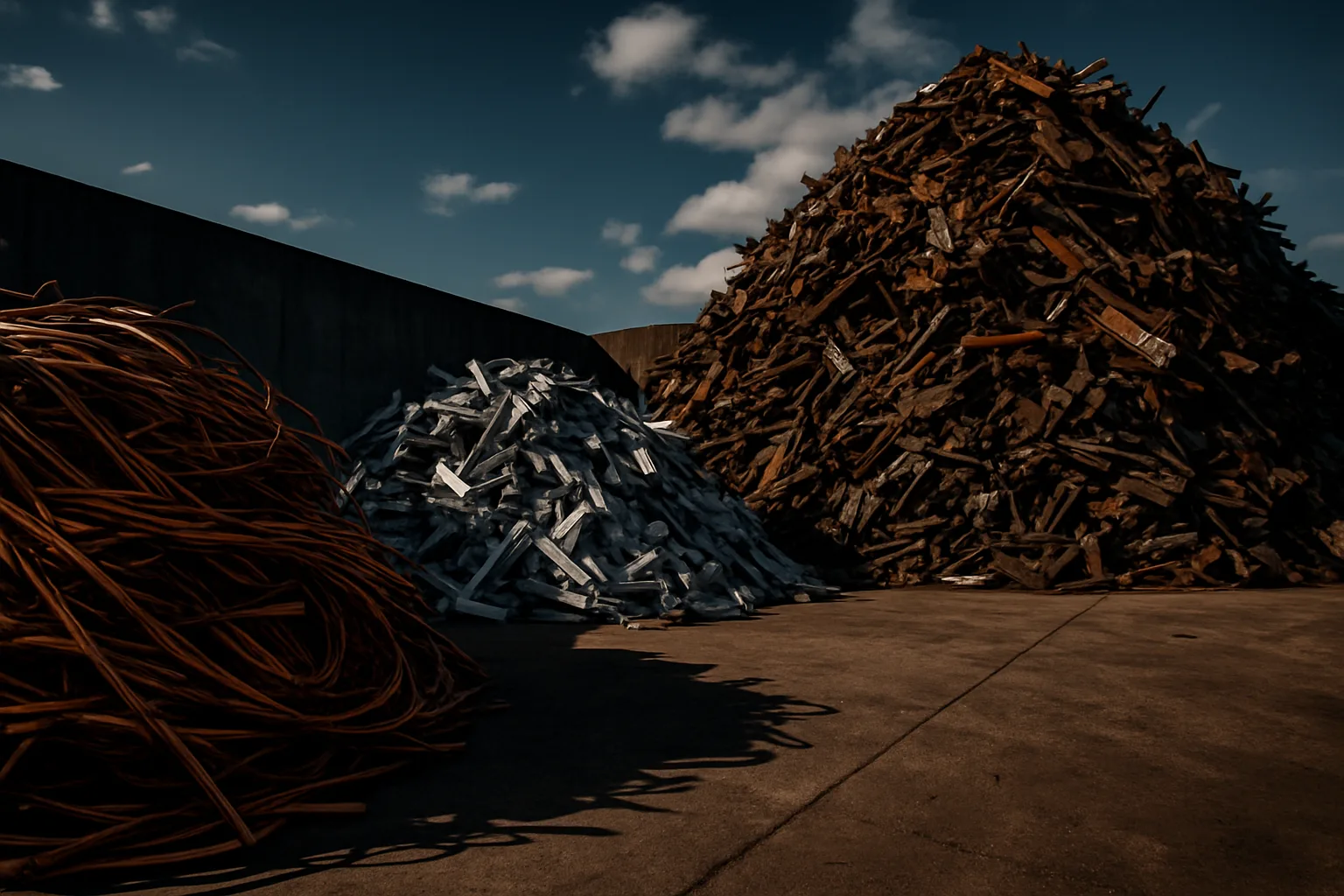
Most people can't tell copper from brass by looking at it — and that mistake costs them money every time they bring a mixed load to the yard. Knowing how to identify scrap metal before you sell isn't just a hobbyist trick. It's the difference between getting paid top dollar and leaving cash on the table.
If you're looking to sell scrap metal near me Cambridge and want to walk into the yard with confidence, this guide gives you the practical tools to sort your load correctly. No lab equipment needed. Just your eyes, a magnet, and a few minutes.
Why Metal Identification Matters Before You Sell
Scrap yards price metals by category. Copper wire is not the same as copper pipe, and neither is the same as brass fittings — even though they all look similar in a pile. If you show up with a mixed, unsorted load, you often get paid at the lowest rate in the pile, not the average. Yards aren't doing you a favour when they blend it — they're managing their own risk.
In Ontario, buyers and processors deal with everything from automotive shredder residue to clean non-ferrous loads from demolition contractors. The cleaner and better-identified your material, the more leverage you have when negotiating. Platforms like SMASH make this point explicitly — documented, sorted inventory consistently attracts more competitive bids than vague descriptions and mystery mixed loads.
Whether you're a homeowner clearing out a renovation or a small contractor in Cambridge moving regular loads, knowing your metals puts you in control. That's where this guide starts.
The Magnet Test: Your First and Most Reliable Tool
A strong magnet — even a refrigerator magnet works in a pinch, but a rare earth magnet is better — tells you the single most important thing about any piece of metal: is it ferrous or non-ferrous?
Ferrous metals are magnetic. They contain iron. Steel and cast iron are the most common. These are typically your lower-value scrap metals, sold by the ton rather than by the pound. That doesn't mean they're worthless — a full load of clean steel still has real value — but they trade at a fraction of what non-ferrous metals fetch.
Non-ferrous metals are not magnetic. Copper, aluminum, brass, stainless steel, lead, and zinc all fall into this category. These are the metals you want to identify carefully because the price variation between them is significant. Copper can trade at multiples of what aluminum fetches per pound.
Here's how to run the test:
- Hold your magnet near the metal — don't press it yet.
- If it snaps on and holds firmly, you've got a ferrous metal (steel or iron).
- If there's no attraction or only a faint pull, you're likely dealing with non-ferrous material.
- Note: Stainless steel can be tricky — some grades are mildly magnetic, some aren't. When in doubt, check the colour and weight.
Once you've separated your ferrous from non-ferrous, the visual guide below helps you drill down further.
Visual Identification Guide for Common Scrap Metals
Colour, weight, and surface texture are your next three tools. Here's what to look for with the metals you're most likely to encounter in Ontario scrap metal recycling.
Copper
Fresh copper is unmistakable — a warm reddish-orange colour, similar to a new penny. Aged copper turns green (patina) or darkens to a brown-black. It's dense and soft enough that you can scratch it with a key. Copper wire, pipe, coils from air conditioners, and electrical motors all contain copper. Bright bare copper wire commands the highest rate; insulated wire is lower because the plastic coating must be stripped.
Aluminum
Aluminum is lightweight — noticeably lighter than steel of the same size — and typically silver-grey in colour. It doesn't rust; it oxidizes to a dull, powdery white coating instead. You'll find it in window frames, rims, engine blocks, cans, and siding. sell your scrap metal in Canada on GetMyScrap and make sure to separate your cast aluminum (like engine blocks) from your sheet or extruded aluminum — the prices differ.
Brass
Brass has a yellowish-gold tone, darker than copper, warmer than aluminum. It's heavier than it looks. Common sources include plumbing fittings, valves, door hardware, keys, and musical instruments. It's a copper-zinc alloy, so it shares that warm metallic tone but with a distinctly more golden hue.
Stainless Steel
Shiny, silver, and resistant to rust. Stainless steel is heavier than aluminum and may have a faint magnetic pull depending on the grade. Kitchen equipment, restaurant fixtures, exhaust systems, and medical equipment are common sources. It's non-ferrous in pricing terms but sits well below copper and brass.
Lead
Lead is extremely heavy for its size — denser than almost anything else you'll handle. It's dark grey, soft (you can mark it with your fingernail), and dull in finish. Old pipe, wheel weights, and cable sheathing are common sources. Handle with care and wash your hands afterward.
Cast Iron and Steel
Both are magnetic. Cast iron is brittle, heavy, and usually found in engine blocks, pipes, and old radiators. Steel is everywhere — appliances, structural beams, rebar, car bodies. These are your ferrous metals and typically your bulk tonnage material in scrap metal recycling Canada-wide operations.
Identifying Catalytic Converters: A Category of Its Own
Catalytic converters deserve their own section because they're one of the most valuable — and most regulated — items in the scrap metal world right now. They contain platinum group metals (PGMs): platinum, palladium, and rhodium. None of those are identifiable by magnet or colour test. The value is inside the ceramic substrate, not in the outer shell.
What you can do visually: check the housing material (usually stainless steel), look for the OEM stamping or part number on the body, and — critically — make sure you have documentation proving where the unit came from. In Ontario and across Canada, converters require a valid chain of custody. Yards and platforms operating as a legitimate scrap metal auction will ask for VIN documentation, seller ID, and source information. That's not a hassle — it's what separates legal, traceable transactions from those that put sellers at legal risk.
If you're in Cambridge and have catalytic converters to sell, use the Cambridge scrap metal services page to connect with buyers who handle converters properly and transparently.
Platforms like sell your scrap metal on SMASH Recycling use serial tracking and photo documentation for converter transactions specifically because the paper trail protects everyone — the seller included.
How Sorting and Documentation Affect Your Scrap Metal Prices in Ontario
Here's the practical payoff of everything above: a sorted, identified load with photos gets better bids. That's true whether you're negotiating at a local Cambridge yard or listing through a SMASH scrap metal auction. Buyers price in uncertainty. If they can't confirm what they're buying, they lower their bid to protect themselves.
The old way — tossing everything in a bin, calling one buyer, accepting whatever they offer — leaves money behind. The newer approach is competitive and documented. You identify the metals, photograph them, note the weights and grades, and let buyers compete. That process is what drives better scrap metal prices Ontario sellers are seeing on platforms built around transparency.
A few practical sorting tips:
- Keep copper wire separate from insulated wire — the price gap is real.
- Don't mix brass and copper; they look similar but price differently.
- Separate clean aluminum from painted or coated aluminum.
- Pull steel out of your non-ferrous pile — even small pieces drag down the grade.
- Bag small items (fittings, connectors) by metal type before weighing.
When you explore Canadian scrap metal guides, you'll find consistent advice pointing in the same direction: sorted and documented loads consistently outperform random mixed loads at sale time.
Put Your Knowledge to Work: Selling Smarter in Cambridge
Now that you can identify what you have, the next step is making sure you're selling it at a competitive price. Cambridge has active industrial corridors and a steady stream of renovation and construction material moving through the area — which means the buyers are there if you know how to reach them.
Don't settle for one phone call to one buyer. The scrap market moves daily. Scrap metal prices ontario and across Canada fluctuate with global commodity markets, currency moves, and local demand. A load priced on Monday might fetch more on Wednesday. The only way to know you're getting a fair price is to create competition for your material.
That's exactly what SMASH is built for. Vetted buyers compete in a transparent auction format, you get documented bids, and there are no subscription fees — SMASH only wins when you do. Whether you're moving a few hundred pounds of copper or a pallet of catalytic converters from a Cambridge shop, the process is the same: identify, document, compete.
Ready to stop guessing and start selling with data behind you? Get a fair price for your scrap today — request a pickup at getmyscrap.ca and put what you've learned in this guide to work immediately.
Frequently Asked Questions
Q: How do I know if my scrap metal is worth selling near Cambridge?
If your magnet test reveals non-ferrous metals — copper, aluminum, brass, or stainless — you almost certainly have something worth selling. Even ferrous loads (steel, cast iron) have value at volume. Run through the visual guide above, estimate your weight, and check current market rates before you go. Scrap metal prices fluctuate, so checking the day you plan to sell matters.
Q: Can I sell scrap metal without sorting it first?
You can, but you'll likely be paid at the lowest rate in your mixed load. Yards and auction buyers price unsorted material conservatively because they're absorbing the labour and risk of sorting it themselves. A sorted load — even a basic ferrous/non-ferrous split — typically results in better returns than a mixed pile of the same weight.
Q: How do catalytic converter sales work in Ontario?
In Ontario, selling catalytic converters requires valid identification and documentation showing where the units came from — typically a VIN or purchase record. Reputable buyers and platforms like SMASH require this information to ensure the transaction is legal and traceable. Don't sell converters to anyone who doesn't ask for documentation; it's a red flag for both legality and price reliability.
Q: What's the difference between a scrap metal auction and just going to a local yard?
A local yard offers you one price from one buyer. A scrap metal auction puts your material in front of multiple vetted buyers who compete against each other. Competition tends to drive better price discovery — especially for non-ferrous metals, catalytic converters, and larger loads where the margin between bids can be meaningful. Platforms like SMASH operate on this model with no subscription fees.
Q: How do I find current scrap metal prices in Ontario or Cambridge?
Scrap metal prices in Ontario move with global commodity markets, so today's copper price may differ from last week's. Check with local yards directly, or use platforms like SMASH that provide transparent, competitive bids based on current market conditions. Always check prices the day you plan to sell, not the day you plan to sort your material.
Disclaimer: Scrap metal prices fluctuate daily based on global commodity markets, local demand, and material grade. All price information in this guide is general in nature. Check current rates before selling.
Stay current on scrap metal market trends and industry news by following SMASH on LinkedIn — practical updates for sellers and buyers across North America, no filler.
```