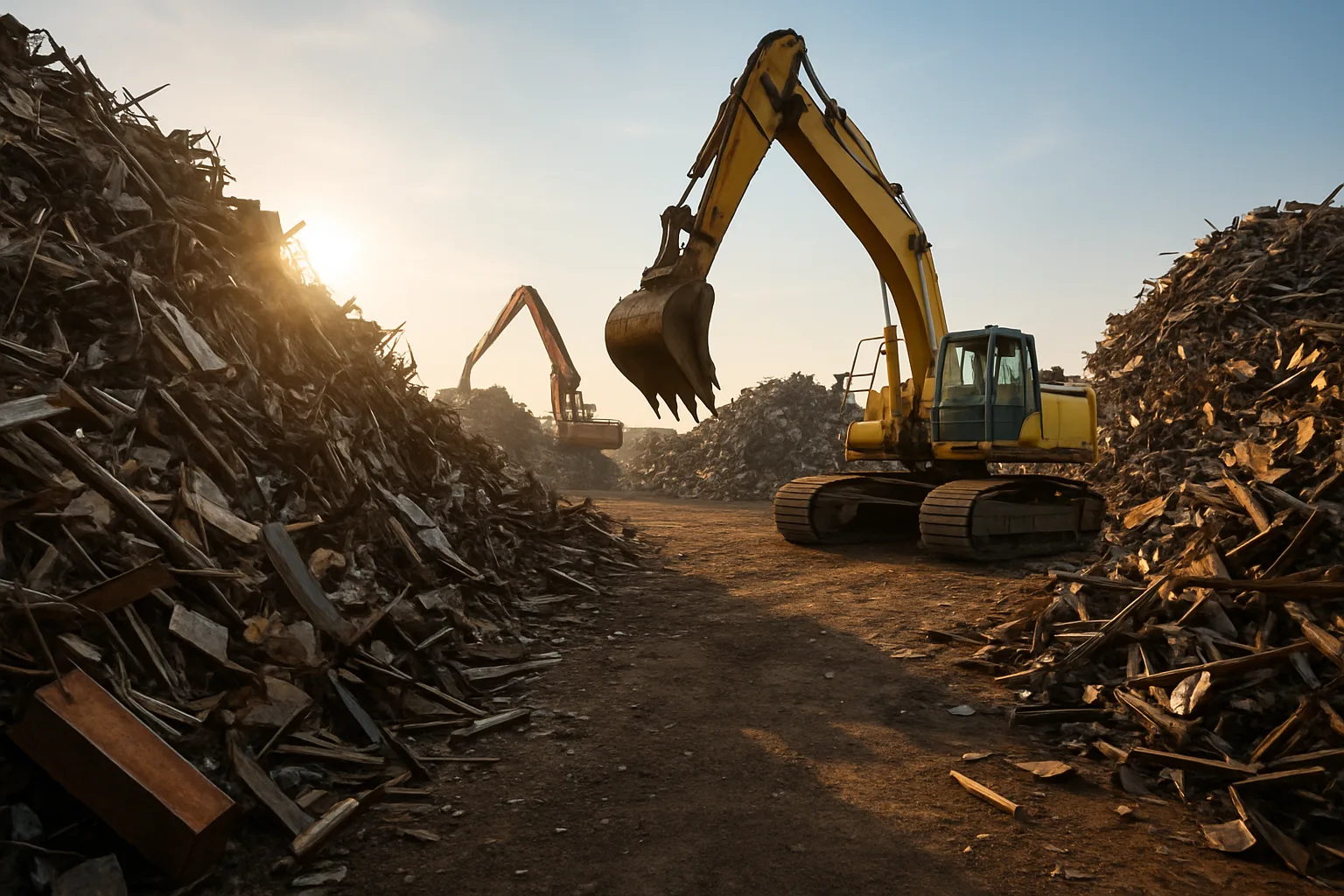
Every tonne of scrap steel recycled saves roughly 1.4 tonnes of iron ore from being mined. That's not a marketing statistic — it's basic metallurgy. Yet most people selling scrap copper, aluminum, or catalytic converters in Ottawa are focused on one thing: what they'll get paid today. Fair enough. But understanding the environmental context and the regulations shaping the industry in 2026 can actually help you sell smarter, stay compliant, and avoid headaches at the yard gate.
Scrap metal recycling in Ontario is operating under an increasingly complex regulatory environment. Federal and provincial rules around transportation, documentation, and material handling have tightened over the past several years. If you're selling loads regularly — whether you're a demolition contractor, an auto wrecker, or a yard aggregating non-ferrous material — knowing what's required protects you and gets your loads accepted faster.
This week's roundup breaks down the environmental side of scrap metal prices Ottawa sellers rarely talk about: why regulations exist, what they cover, how they affect your transactions, and how platforms like SMASH are helping bring transparency to a market that badly needed it.
---Why Environmental Regulations in Scrap Metal Recycling Actually Matter to Sellers
It's easy to think of environmental regulations as somebody else's problem — the yard's, the processor's, the government's. But if you're the one bringing material in, you're part of the chain. And regulators increasingly treat the supply chain as a shared responsibility.
In Ontario, the handling and transportation of certain scrap materials — particularly end-of-life vehicles, catalytic converters, and materials that may contain hazardous fluids — falls under provincial environmental protection rules. Vehicles must be properly drained of fluids before transport. Batteries, mercury switches, and refrigerants require separate handling. Facilities that process these materials are licensed and inspected. The rules exist because improperly handled scrap creates real contamination risk — in soil, groundwater, and air.
For sellers in the Ottawa area, this has practical implications:
- End-of-life vehicles must have fluids removed before they're crushed or shredded.
- Air conditioning refrigerants must be recovered by a certified technician.
- Mercury-containing components (like older ABS switches) require separate disposal.
- Loads that arrive at a yard with hazardous materials still present can be rejected — or create liability.
None of this is designed to make selling harder. It's designed to keep recycling legitimate and sustainable. When yards operate within these rules, the whole market is cleaner — literally and commercially.
---Scrap Metal Recycling Ontario: The Regulatory Landscape in 2026
Ontario's scrap metal industry in 2026 operates under a layered framework. The Resource Recovery and Circular Economy Act governs producer responsibility and material recovery obligations at a broad level. The Environmental Protection Act applies to specific waste classifications and handling requirements. And municipal bylaws — including those in Ottawa — can add another layer around facility zoning, vehicle storage, and noise or runoff controls at yard locations.
For catalytic converter buyers and sellers, 2026 has brought continued scrutiny around stolen goods documentation. Ontario regulations require secondary metal dealers to maintain records of sellers, including identification, for catalytic converter transactions. This isn't optional. Yards that skip it face fines. Sellers who can't provide ID may be turned away. If you're selling cats — especially in volume — documentation is non-negotiable.
Copper scrap has its own documentation pressures. Given the ongoing theft problem at construction sites and infrastructure projects, copper scrap transactions are subject to seller verification at most Ontario yards. This affects copper scrap price today negotiations too — well-documented loads from known sources are easier to buy and price confidently. A seller who shows up with a packing list, photos, and source documentation is going to have a different conversation than one who arrives with a truck and a shrug.
The documentation burden is real, but it's manageable. And it's exactly the kind of friction that a scrap metal auction platform like SMASH is built to absorb — organizing your inventory records, photo documentation, and serial tracking before your load ever hits the auction.
---The Environmental Upside: Why Recycling Beats Mining Every Time
Let's step back from compliance for a minute and talk about why this industry matters beyond the transaction. Scrap metal recycling is genuinely one of the most effective environmental tools available at scale — and that's not greenwashing, it's physics.
Recycling aluminum uses roughly 95% less energy than producing primary aluminum from bauxite ore. For copper, the savings are around 85%. Steel recycling cuts energy use by approximately 60-70% compared to virgin production. These aren't rounding errors — they represent massive reductions in emissions, water use, and land disturbance.
In Ontario, recycling facilities divert millions of tonnes of material from landfills annually. The Ottawa region alone generates significant volumes of industrial, commercial, and demolition scrap. When that material moves through a legitimate, documented supply chain — rather than being landfilled, hoarded, or sold through untracked channels — the environmental benefit compounds.
There's also a market signal embedded in this. Buyers who operate sustainably certified facilities — using documented sourcing, proper material segregation, and clean handling — are increasingly preferred by downstream manufacturers with their own ESG obligations. That preference translates into demand, and demand drives price. Selling into a vetted, competitive market isn't just good for your wallet. It's good for the supply chain's credibility.
If you want to sell your scrap metal in Canada on GetMyScrap, you're already plugging into a system designed with these standards in mind.
---How Documentation and Transparency Are Changing Scrap Metal Prices Ottawa Sellers Receive
Here's the market reality nobody talks about plainly: undocumented loads get discounted. Always have. The buyer takes on unknown risk — unknown source, unknown contamination, unknown regulatory exposure. That risk gets priced in, and it comes off your cheque.
In 2026, that discount is bigger than it used to be. Regulatory scrutiny is higher. Downstream buyers — the mills and smelters — are asking harder questions about sourcing. A load of scrap copper or scrap aluminum that arrives with clean photo documentation, a packing list, a weight ticket, and source verification is a different product than one that doesn't. Buyers know it. Prices reflect it.
This is where competitive auctions change the equation. When you list a documented load through a scrap metal auction platform, you're not relying on one buyer's valuation. Multiple vetted buyers see the same information and compete. That competition can help reveal the true market. More buyers means better price discovery — especially for well-documented loads that give buyers confidence to bid aggressively.
Platforms like SMASH include inventory tools, VIN lookup for automotive loads, serial tracking for catalytic converters, and photo documentation built into the listing process. That's not administrative overhead — it's the infrastructure that turns your material into a credible product that buyers want to pay for. You can compare scrap metal bids from Canadian buyers and see what competition actually does to your price.
For Ottawa sellers dealing with mixed loads — a combination of ferrous, non-ferrous, and automotive cores — documented, categorized listings perform better than bulk "take it all" offers from a single local contact. The old way of selling (one buyer, one phone call, no documentation, guess at the price) leaves money on the table and creates compliance exposure. SMASH exists to replace that with something that works.
---Practical Steps for Ottawa Sellers: Getting Compliant and Getting Paid
You don't need a legal team to navigate this. You need a process. Here's what well-run sellers in the Ottawa area do to stay on the right side of regulations while maximizing what they receive for their material.
- Document your source material. Know where it came from and be able to prove it. This matters most for copper, catalytic converters, and automotive loads.
- Photograph everything before it moves. Weight estimates, condition, visible markings — photos create a record that protects you and creates buyer confidence.
- Separate your materials. Mixed loads get priced at the lowest common denominator. Sorted, separated loads get accurate grades and better prices.
- Handle fluids before transport. End-of-life vehicles need to be drained. This is both a regulatory requirement and a yard acceptance condition.
- Bring ID for cat and copper transactions. Ontario secondary metal dealer requirements mean you'll need to verify your identity. Have it ready.
- Use a platform that handles the paperwork. Auto-invoicing, BOLs, packing lists — these shouldn't be things you're cobbling together manually. A good platform handles them.
Following these steps doesn't just keep you compliant — it positions your loads as premium material in a competitive market. You can get a fair price for your scrap today when your material is presented the right way. And if you're newer to the process, explore Canadian scrap metal guides for practical breakdowns on grading, pricing, and what yards look for.
Ottawa's Ottawa scrap metal services are evolving fast — competitive platforms, better documentation tools, and a regulatory environment that rewards sellers who operate cleanly. Get ahead of it now.
---The Bigger Picture: Scrap Metal Recycling Canada in 2026
The scrap metal market in Canada continues to be shaped by global commodity demand, domestic infrastructure investment, and tightening environmental standards. Steel demand from construction and manufacturing keeps ferrous markets active. Copper remains under sustained demand pressure from electrification — EV production, grid infrastructure, and renewable energy installations all consume significant copper volume. That demand doesn't disappear because prices fluctuate week to week.
For sellers across the country — from Ottawa to Toronto to Vancouver — the opportunity in 2026 is real. But capturing that opportunity requires selling into a market that can actually see your material, evaluate it properly, and compete for it. The days of a single buyer setting the price with no reference point are fading. Platforms, documentation, and competitive auctions are replacing guesswork with data.
If you have scrap copper, aluminum, catalytic converters, or ferrous loads sitting in your yard or on your property, the best move is to get them into a system built to move them efficiently and transparently. When you're ready to get a fair price for your scrap metal in Canada, request a pickup at getmyscrap.ca — the process is straightforward, and you'll know exactly where your material stands.
Disclaimer: Scrap metal prices fluctuate based on global commodity markets, grade, volume, and buyer demand. Always check current rates before finalizing any transaction.
---Frequently Asked Questions
Q: What documents do I need to sell catalytic converters in Ottawa?
Ontario secondary metal dealer regulations require sellers to provide government-issued photo identification for catalytic converter transactions. Most yards in the Ottawa area also require proof of vehicle ownership or source documentation for larger volumes. Having this ready before you arrive avoids delays or rejection at the gate.
Q: How do scrap metal prices in Ottawa compare to other Ontario cities?
Scrap metal prices Ottawa sellers receive are influenced by the same global commodity benchmarks as prices in Toronto or Hamilton — copper, aluminum, and steel are priced off international markets. Local factors like transportation costs, yard competition, and regional demand can create small variations. Using a competitive auction platform means you're not limited to what one local yard offers.
Q: What environmental regulations apply to selling end-of-life vehicles in Ontario?
In Ontario, end-of-life vehicles must have fluids drained, batteries removed, and refrigerants recovered by a certified technician before they can be crushed or shredded. These requirements apply to sellers and processors under the province's environmental protection framework. Yards that accept non-compliant vehicles can face regulatory action, which is why many have strict intake requirements.
Q: Is copper scrap price today the same across all Ottawa yards?
No — individual yards set their own buying prices based on their current inventory needs, processing capacity, and buyer relationships. The copper scrap price today at one Ottawa yard may differ from another by a meaningful margin. Listing through a platform that exposes your load to multiple vetted buyers is one way to find where the real market sits without making a dozen phone calls.
Q: What is a scrap metal auction platform and how does it help Ottawa sellers?
A scrap metal auction platform like SMASH connects sellers with multiple vetted buyers who compete for your loads. Instead of calling one local contact and taking whatever price they offer, you list your documented inventory, buyers review it, and competition determines the price. No subscription fees — the platform earns when you do. It's a more transparent way to sell, and more buyers means better price discovery.
---Stay current on scrap metal market trends and industry news — follow SMASH on LinkedIn for weekly insights, pricing context, and recycling industry updates from across North America.