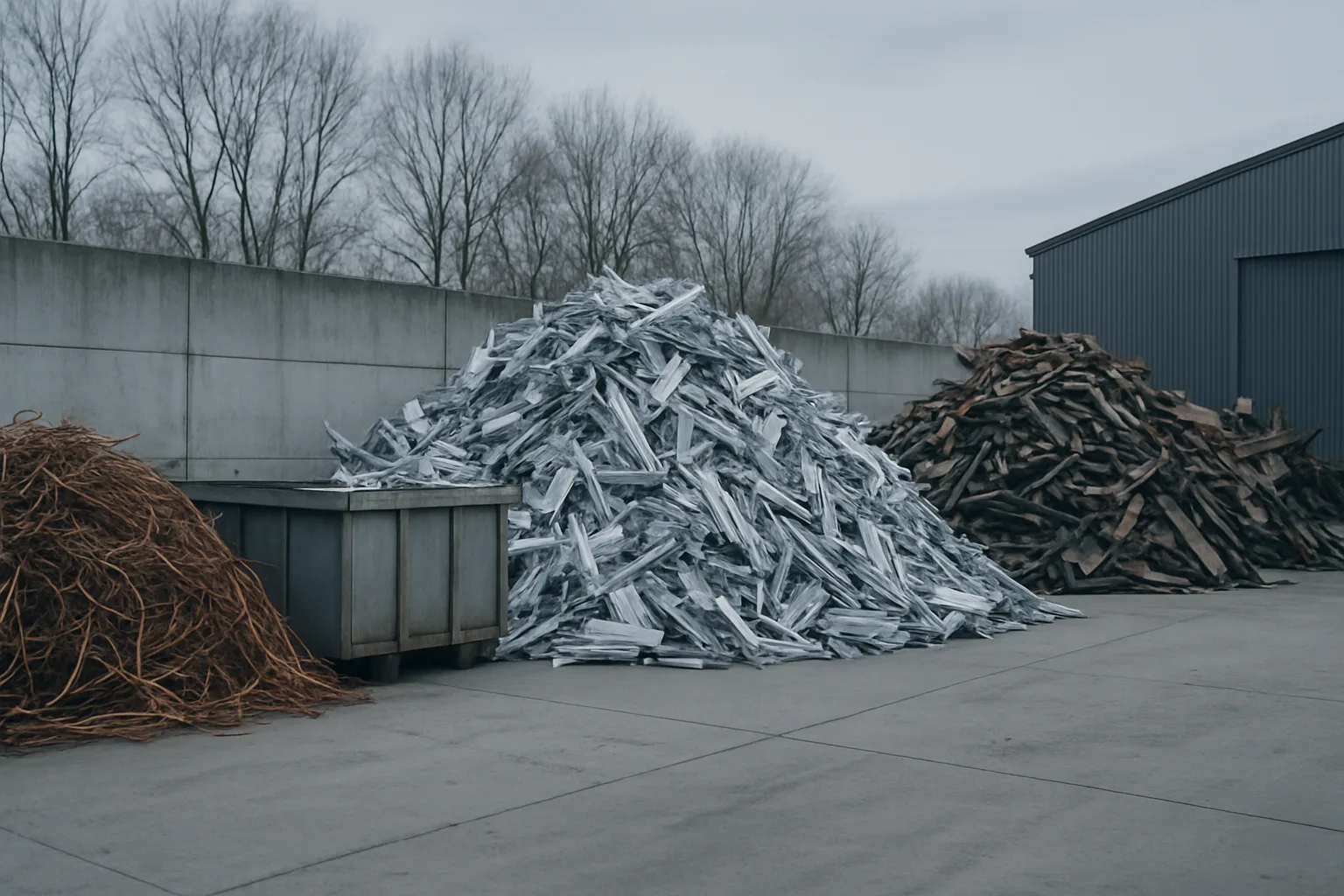
Why Sorting Your Scrap Metal Before You Sell Changes Everything
Most people leaving money on the table at the scrap yard aren't doing anything dramatically wrong. They're just showing up with a mixed pile and taking whatever they're offered. If you've ever wondered why the aluminum scrap price today seems to vary so wildly between sellers — this is usually why. Sorted, clean, identified metal commands better prices. Unsorted mixed loads get averaged down, and the buyer pockets the difference.
Whether you're cleaning out a shop in Trois-Rivières, clearing a jobsite in Quebec, or running a recycling operation and want to maximize every load — the prep work you do before the sale determines the price you walk away with. This guide breaks down exactly how to sort and prepare your scrap metal so you're not leaving value behind.
Know What You Have: Identifying Common Scrap Metals
Before you can sort anything, you need to know what you're looking at. Scrap metal broadly falls into two categories: ferrous (iron-based, magnetic) and non-ferrous (everything else — aluminum, copper, brass, stainless). Non-ferrous metals are almost always worth more per kilogram, and mixing them with steel or iron drops their value immediately.
Here's a quick field guide to what you're likely dealing with:
- Copper: Reddish-orange when clean, greenish when oxidized. Found in electrical wiring, plumbing pipe, and motors. One of the highest-value metals in any scrap load.
- Aluminum: Lightweight, silver-grey, non-magnetic. Shows up in window frames, engine components, drink cans, sheet material, and extrusions. The aluminium scrap value per kg varies based on grade — bare bright wire versus cast aluminum, for example, are priced very differently.
- Brass: Yellow-gold in colour. Common in plumbing fittings, valves, and fixtures.
- Stainless Steel: Non-magnetic (or weakly magnetic), bright finish. Often found in kitchen equipment and industrial hardware.
- Catalytic Converters: Contained within the exhaust system of vehicles. High-value due to platinum group metals (PGMs) inside. Pricing is complex and highly variable.
- Ferrous (Steel/Iron): Magnetic. Lower per-kilogram value, but heavy loads add up fast.
A simple magnet is your best sorting tool. If it sticks, it's ferrous. If it doesn't, you've got something worth more attention. Keep a magnet in your pocket when you're collecting — it takes two seconds and saves real money at the scale.
How to Sort Scrap Metal for the Best Scrap Metal Prices in Trois-Rivières
Once you've identified your metals, physical separation is the next step. Yards in the Trois-Rivières area — and across Quebec generally — price loads based on what they can process efficiently. A clean, sorted load is easier to process, which means the buyer can offer more for it. Mixed loads require the yard to do your sorting work, and they'll charge you for that labour in the form of a lower price.
Here's how to approach separation practically:
- Separate ferrous from non-ferrous first. This is the single biggest split. Keep your steel and iron in one bin, everything else separate.
- Break out copper by grade. Bare bright copper (clean, uncoated wire) gets the best price. Insulated wire is worth less but still worth separating from everything else. Copper pipe and tubing is its own category. Don't mix grades if you can help it.
- Sort aluminum by type. Cast aluminum (engine blocks, wheels) is valued differently than extruded aluminum (window frames, structural profiles) or aluminum sheet. Sheet versus cast aluminum can be a significant price difference per kilogram — keeping them separate means you get the right price for each.
- Pull brass fittings separately. Even a small pile of clean brass fittings adds up quickly at brass prices versus mixed metal prices.
- Handle catalytic converters as a separate category entirely. More on this below.
If you're in Trois-Rivières and want to compare what your sorted load is worth before committing to a buyer, platforms like sell your scrap metal on SMASH Recycling connect you with vetted buyers who compete for your load — which means you're not guessing whether you got a fair price.
Cleaning and Preparing Metal: Where the Real Value Is
Sorting is step one. Cleaning is where a lot of sellers stop short — and it costs them. Scrap yards buy metal, not insulation, plastic housing, rubber fittings, or dirt. Every non-metal component attached to your scrap either lowers the grade of the material or reduces the net weight of the metal itself.
Here's what "clean" means for common materials:
- Copper wire: Strip the insulation if you can. Insulated wire grades out significantly lower than bare bright copper. If you have a large volume, a wire stripping tool pays for itself quickly.
- Aluminum extrusions: Remove steel screws, bolts, and hardware before you sell. A window frame with the steel fasteners still in it gets graded as mixed metal, not clean aluminum.
- Radiators: Copper/brass radiators are worth more without steel end tanks attached. Aluminum radiators should have plastic tanks removed where possible.
- Motors and alternators: You can sell as-is, but stripping the copper windings out of a large motor significantly increases your return if you have the time and tools.
- Catalytic converters: Do not cut open, torch, or otherwise process catalytic converters yourself. Sell them intact — buyers price them by the substrate inside, and damage affects the value. Document them with photos and serial numbers before any transaction.
The copper scrap price today you see quoted assumes clean, separated copper — not copper attached to other materials. Same logic applies to aluminum. Understanding this gap is the difference between a good sale and an average one.
Selling Catalytic Converters Online: What Sellers Need to Know
Catalytic converters are one of the most valuable items in a scrap load — and one of the most complicated to sell well. The PGMs inside (platinum, palladium, rhodium) drive the value, and prices fluctuate based on commodity markets. A converter from a late-model truck can be worth several times what a small car converter fetches.
If you want to sell catalytic converters online, documentation matters. Serious buyers want to know the make, model, year, and serial number of the converter. Photos of the converter — both ends and the substrate if visible — help establish what you have before you ship or transfer anything. Platforms that support photo documentation and serial tracking make this process significantly cleaner than a phone call where you're guessing what it's worth.
SMASH was built specifically with this kind of documentation in mind. Inventory tracking, photo uploads, and serial number logging are part of how the platform works — not an afterthought. For sellers with multiple converters or mixed loads that include cats, that structure makes a real difference in how buyers respond and what they're willing to bid.
If you want to sell your scrap metal in Canada on GetMyScrap, the process starts with knowing what you have — and cats are worth taking the time to document properly before you list them.
Pricing Reality: What Drives the Aluminum Scrap Price Today
The aluminum scrap price today isn't a fixed number — it's a moving target driven by global commodity markets, local supply and demand, metal grade, and how clean your material is. The London Metal Exchange (LME) sets benchmark prices that ripple through to what yards and buyers will offer, but the spread between LME price and what you actually receive depends heavily on grade and preparation.
A few things that directly affect what you'll be quoted:
- Grade purity: Mixed aluminum gets a lower per-kg price than clean single-grade material.
- Volume: Larger loads often attract better pricing. Buyers are willing to pay more per kg for a full pallet of sorted, clean aluminum than a small mixed pile.
- Market timing: Aluminum, copper, and other non-ferrous metals move with commodity prices. Selling into a strong market versus a soft one affects your return — sometimes significantly.
- Buyer competition: This is where SMASH changes the dynamic. Rather than accepting one buyer's price, competitive auctions mean multiple vetted buyers see your load and price discovery happens in real time. More buyers means better price discovery — that's not a marketing claim, it's basic economics.
Note: Metal prices fluctuate daily. Always check current rates before committing to a sale. The figures you find online or quoted verbally are market approximations — not guarantees.
If you're wondering how aluminium scrap value per kg stacks up for your specific material and grade, the best move is to get multiple quotes. You can get a fair price for your scrap today by connecting with buyers who actually compete for your load rather than setting a take-it-or-leave-it price.
The Practical Checklist Before You Sell Scrap Metal in Canada
You've sorted, you've cleaned, you know roughly what you have. Before you commit to a buyer — whether you're in Quebec or anywhere else in Canada — run through this checklist to make sure you're not leaving anything on the table.
- ✅ Ferrous and non-ferrous separated
- ✅ Copper sorted by grade (bare bright, insulated, pipe, fittings)
- ✅ Aluminum sorted by type (cast, extrusion, sheet, cans)
- ✅ Catalytic converters documented with photos and serial numbers
- ✅ Steel hardware and fasteners removed from non-ferrous material
- ✅ Insulation stripped from copper wire (where practical)
- ✅ You've checked the current aluminum scrap price today before accepting a quote
- ✅ You're getting more than one price — not just the first offer
That last point is where most sellers underperform. A single call to a single buyer gives you a single data point. That's not a market price — it's one person's offer. Explore Canadian scrap metal guides to dig deeper into how pricing works across different metals and regions.
If you're selling a meaningful volume of scrap — especially non-ferrous, catalytic converters, or mixed industrial loads — run it through a platform where buyers compete. SMASH operates on a no-subscription model, which means there's no fee to list. We only win when the seller wins. That alignment matters.
Ready to stop guessing and start selling smarter? Get a fair price for your scrap metal in Canada — request a pickup or list your load at getmyscrap.ca.
Frequently Asked Questions
Q: What is the aluminum scrap price today in Canada?
Aluminum scrap prices in Canada vary by grade, region, and current commodity markets. Clean extruded aluminum, cast aluminum, and aluminum sheet all have different per-kilogram values. Prices fluctuate daily based on LME benchmarks and local demand — always check current rates with multiple buyers before selling. Getting competitive quotes through a platform like SMASH helps you see what the actual market will pay, not just one yard's posted rate.
Q: Where can I find the best scrap metal prices in Trois-Rivières?
The best scrap metal prices in Trois-Rivières come from preparation and competition — not luck. Yards in the region price clean, sorted loads higher than mixed material. Beyond local yards, online platforms that connect you with multiple vetted buyers can generate competitive bids on your load. Checking more than one source before you commit is the single most effective way to improve your return.
Q: How do I sell catalytic converters online safely in Canada?
To sell catalytic converters online, document each converter with clear photos and the serial number stamped on the unit. Note the vehicle make, model, and year if you have it. Use a platform that has vetted buyers and supports proper documentation — this protects both sides of the transaction and typically results in better pricing. Never sell catalytic converters without verifying you have legitimate ownership — Canadian scrap regulations require proper documentation for converter sales.
Q: Does sorting my scrap metal actually make a difference in price?
Yes — significantly. Unsorted mixed loads force buyers to average down the price across everything in the pile. A clean, separated load of copper wire, aluminum extrusions, and brass fittings will earn you more per kilogram across all three categories than the same weight sold as a mixed pile. The extra time spent sorting almost always pays off, especially on non-ferrous metals where price differences between grades are substantial.
Q: What scrap metals are worth the most per kilogram in Quebec?
Copper — especially clean, bare bright wire — consistently ranks among the highest per-kilogram values in Quebec and across Canada. Catalytic converters (when properly documented and identified) can also yield strong returns due to the precious metals inside. Aluminum, brass, and stainless steel follow, with ferrous metals (steel, iron) being the lowest per-kg but often high in total value due to weight. Prices shift with commodity markets, so timing and preparation both factor in.
Stay current on scrap metal market trends and industry insights — follow SMASH on LinkedIn for regular updates from the North American scrap metal market.