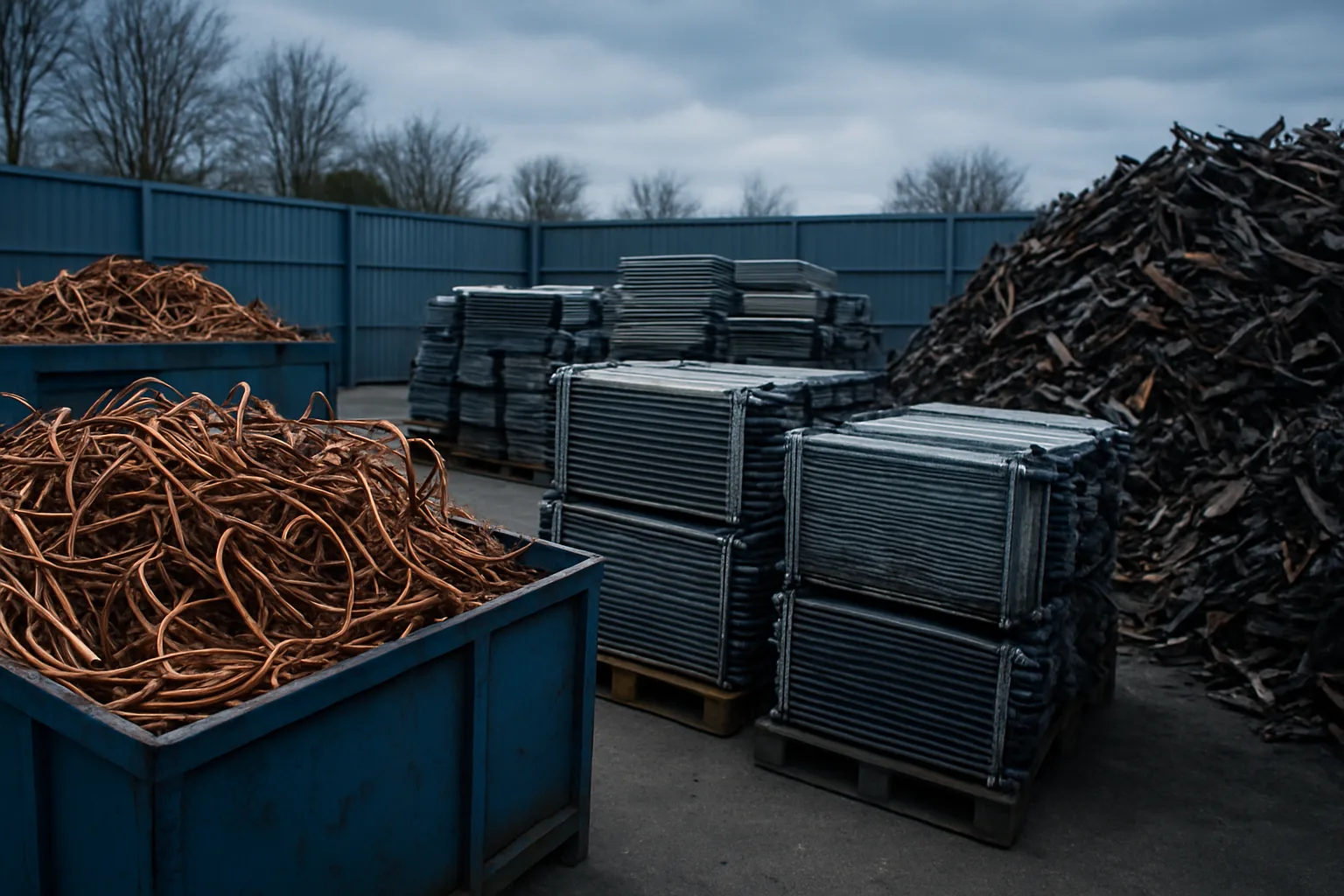
Most people know a junked car has value. Few realize how much of that value is hiding inside the engine bay — in the radiator, the alternator, the starter motor, and a dozen other components that recyclers quietly turn into raw metal every single day. If you're watching the steel scrap price today and wondering whether those old auto parts in your shop or yard are worth anything, the answer is yes. Significantly.
Auto parts recycling is one of the most material-rich segments of the scrap industry. Radiators carry copper and aluminum. Alternators hold copper windings and steel housings. Starters, AC compressors, and power steering pumps each contain a mix of metals that processors separate, grade, and sell into different streams. Understanding what's inside these parts — and how recyclers handle them — helps you make smarter decisions about what to keep together and what to separate before you sell.
What's Actually Inside a Radiator or Alternator
A standard automotive radiator is built from one of two material combinations: copper-brass or aluminum. Older vehicles (pre-2000s, roughly) tend to use copper-brass radiators, which are highly sought after in scrap because both metals carry strong value. Aluminum radiators dominate modern vehicles and are lighter and easier to process, though they grade out differently. Both types are worth pulling out and selling separately rather than lumping them in with general auto shred.
Alternators are more complex. The housing is typically cast aluminum or steel. Inside, you'll find copper windings around an iron core — that's where the value concentrates. Recyclers who process alternators in volume often break them down to recover the copper separately, because copper commands a meaningfully higher price per pound than the steel or aluminum surrounding it. move constantly, but the spread between copper and steel is wide enough that separation almost always pays off.
- Copper-brass radiators: Copper tubes, brass headers, steel tanks — high-value combo
- Aluminum radiators: All-aluminum core and tanks — grades as clean aluminum or mixed
- Alternators: Copper windings, iron rotor, aluminum or steel housing
- Starters: Copper windings, steel casing, sometimes aluminum end caps
- AC compressors: Cast aluminum body, steel internals, copper windings in electric variants
- Power steering pumps: Aluminum housing, steel shaft and internals
Every one of these parts has a scrap identity beyond "old car part." Knowing that identity is the difference between getting paid for mixed metal and getting paid for copper.
How Auto Parts Move Through the Recycling Process
When a recycler receives a load of auto parts, the first decision is whether to process them whole or break them down. Whole alternators, for example, get weighed and graded as "alternator scrap" — a recognized category at most yards. But a processor who cracks them open and pulls the copper windings is working with a more valuable commodity. The labor cost of that breakdown has to pencil out, which is why volume matters in this business.
Radiators go through a different path. Copper-brass units often get de-tinned and baled before going to a smelter. Aluminum radiators are shredded or baled and fed into aluminum melt streams. The key at every stage is keeping material clean — no plastic end tanks, no rubber hoses, no steel hardware mixed in with aluminum cores. Contamination drops the grade and drops your price.
After initial processing, the separated metals enter broader commodity markets. Steel and iron go to electric arc furnaces. Aluminum goes to secondary smelters. Copper goes to rod mills or brass mills. The steel scrap price today on HMS (heavy melt steel) is different from the shredded auto price, which is different again from the price on cast aluminum or bare bright copper. These aren't the same number, and treating them as such costs yards and sellers real money.
Steel Scrap Price Today — What It Means for Auto Parts Sellers in Ontario
If you're selling auto parts scrap in Ontario — whether you're running a shop in St. Catharines, a fleet yard in Hamilton, or a dismantler in the GTA — the steel scrap price today is your baseline, not your ceiling. Steel and iron are in almost every auto part. But the smart move is to identify and separate the higher-value non-ferrous material before anything goes on the scale.
Ontario has a mature recycling infrastructure. Processors in the Niagara region and broader southwestern Ontario have the equipment to handle auto parts volume. That said, pricing varies between buyers — sometimes significantly. A single phone call to one buyer is not price discovery. It's a guess with one data point. Platforms like compare scrap metal bids from Canadian buyers exist precisely because that one-call approach leaves money on the table, every time.
For auto parts specifically, watch these price categories:
- Scrap copper (bare bright, #1, #2): Copper windings from alternators and starters grade here
- Cast aluminum: AC compressors, alternator housings, pump bodies
- Copper-brass radiators: Priced per pound, separate from steel
- Aluminum radiators: Priced per pound, often with a clean vs. dirty split
- Shredder-ready steel: Engine blocks, steel housings, mixed iron
Scrap metal prices today fluctuate with global demand, currency moves, and energy costs. Check current rates before you sell — don't rely on what you heard last month.
Why Separation Before Sale Matters for B2B Scrap Metal Sellers
In a B2B scrap metal marketplace, buyers price what they see. A mixed bin of auto parts — radiators, alternators, brackets, and hoses all together — grades as mixed metal or auto shred. That's the lowest common denominator price. Pull the copper-brass radiators out. Pull the alternators and starters. Pull the cast aluminum. Now you have three or four separate loads with three or four separate price points, and your per-pound average goes up considerably.
This is how volume shops in St. Catharines and across Ontario run their scrap programs. They don't throw everything in one bin. They train their staff to route materials correctly from the moment they come off a vehicle. That discipline compounds over time — more accurate inventory, cleaner loads, better prices from buyers, and less back-and-forth at the scale.
SMASH is built for this kind of seller. The platform lets you document your inventory with photos, weights, and material classifications before it goes to auction. Buyers bid on documented loads, not mystery bins. That transparency is what drives competition — and competition is what drives price discovery. If you want to sell your scrap metal in Canada on GetMyScrap, starting with accurate material identification is the right first step.
Using SMASH to Get Better Prices on Auto Parts Scrap
Most auto parts scrap moves through a short, closed loop: shop calls one buyer, buyer quotes a price, seller takes it or leaves it. There's no competition in that model. The buyer holds the information advantage. They know what the market is paying. The seller often doesn't.
SMASH breaks that dynamic. The SMASH scrap metal auction model puts your documented load in front of multiple vetted buyers simultaneously. They compete. You see the bids. The market tells you what your material is worth — not one buyer's margin calculation. For shops selling alternators, radiators, and non-ferrous auto parts in volume, that visibility is worth real money over time.
The platform handles photo documentation, inventory tracking, and auto-invoicing. There are no subscription fees — SMASH earns only when you sell. That alignment matters. If you're a shop or yard in Ontario looking to professionalize how you move scrap, it's worth understanding what a competitive auction process actually looks like versus a single-buyer phone call. Explore Canadian scrap metal guides to get up to speed on how buyers evaluate material and what documentation actually moves the needle on price.
Whether you're selling in Niagara, looking for the best scrap metal prices Winnipeg buyers are offering, or running a dismantler operation with weekly loads coming off the floor, the principle is the same: more buyers, more bids, better price discovery. The auto parts in your yard aren't a mystery box. They're identifiable commodities with real market values — and you deserve to know what those values are.
If you're in the St. Catharines area and want to understand your options locally, check out the available St. Catharines scrap metal services to connect with buyers who know the Niagara region market.
Getting Started: What to Do Before You Sell Auto Parts Scrap
Before your next scrap pickup or yard sale, run through this checklist. It takes time upfront but pays back in better prices and fewer surprises at the scale.
- Identify material type: Copper-brass radiator vs. aluminum radiator — they're not the same
- Separate non-ferrous from steel: Don't let copper and aluminum get buried in a steel load
- Remove contaminants: Strip plastic tanks, rubber hoses, and steel hardware from aluminum radiators
- Weigh and document before selling: Know your own numbers before a buyer quotes you
- Get more than one bid: One call is not a market price — it's one buyer's offer
- Check current prices: Scrap metal prices today are not the same as last week's prices
If you're a first-time seller, start simple. Pull the obvious non-ferrous pieces. Get them weighed separately. Ask the buyer how they're grading each item. That conversation alone will teach you more about your material's value than months of guessing. And when you're ready to move volume consistently, a platform like SMASH makes the process repeatable, documented, and competitive.
Ready to stop guessing and start selling with confidence? Get a fair price for your scrap today — whether you're clearing out a shop, running a dismantler, or selling industrial volumes across Ontario. Request a pickup at getmyscrap.ca and know what your auto parts scrap is actually worth.
Disclaimer: Scrap metal prices fluctuate daily based on global commodity markets, local supply and demand, and material grade. Always verify current rates before selling.
Frequently Asked Questions
Q: What is the steel scrap price today for auto parts in Ontario?
Steel scrap prices fluctuate daily and vary by grade — shredded auto steel, HMS (heavy melt), and cast iron all price differently. In Ontario, your best approach is to check with multiple buyers or use a platform that provides competitive bids rather than relying on a single quote. Always separate non-ferrous components like copper and aluminum before selling, as they carry significantly higher per-pound values than steel.
Q: Are alternators and radiators worth scrapping separately or should I sell them as mixed auto parts?
Selling them separately almost always gets you a better price. Alternators contain copper windings that grade as scrap copper — a much higher value than mixed auto shred. Radiators, especially copper-brass units, have their own price category. Mixing them into a general auto parts bin means you get paid at the lowest material grade in that bin.
Q: Where can I sell auto parts scrap in St. Catharines, Ontario?
St. Catharines has scrap metal buyers serving the Niagara region, and processors in the broader Ontario market accept auto parts loads regularly. For competitive pricing, consider using a multi-buyer platform like SMASH, which puts your documented load in front of vetted buyers who bid against each other — rather than relying on a single local quote.
Q: How do scrap metal prices today affect what I get for copper from alternators?
Copper prices are tied to global commodity markets and move independently from steel prices. Scrap copper (including copper windings from alternators) typically prices significantly higher per pound than steel scrap. Checking current scrap metal prices today before you sell — not last month's rates — is the only way to know what your material is worth right now.
Q: What is a B2B scrap metal marketplace and how does it help auto parts sellers?
A B2B scrap metal marketplace connects sellers with multiple vetted buyers in a competitive format, rather than the traditional single-buyer phone call. Platforms like SMASH let you document your auto parts load with photos and weights, then put it to auction so buyers compete on price. That competition creates real price discovery — which is especially valuable for high-volume sellers moving alternators, radiators, and mixed non-ferrous auto parts regularly.
Stay current on scrap metal markets and industry news — follow SMASH on LinkedIn for regular updates on scrap metal prices, market trends, and recycling industry insights across North America.
```