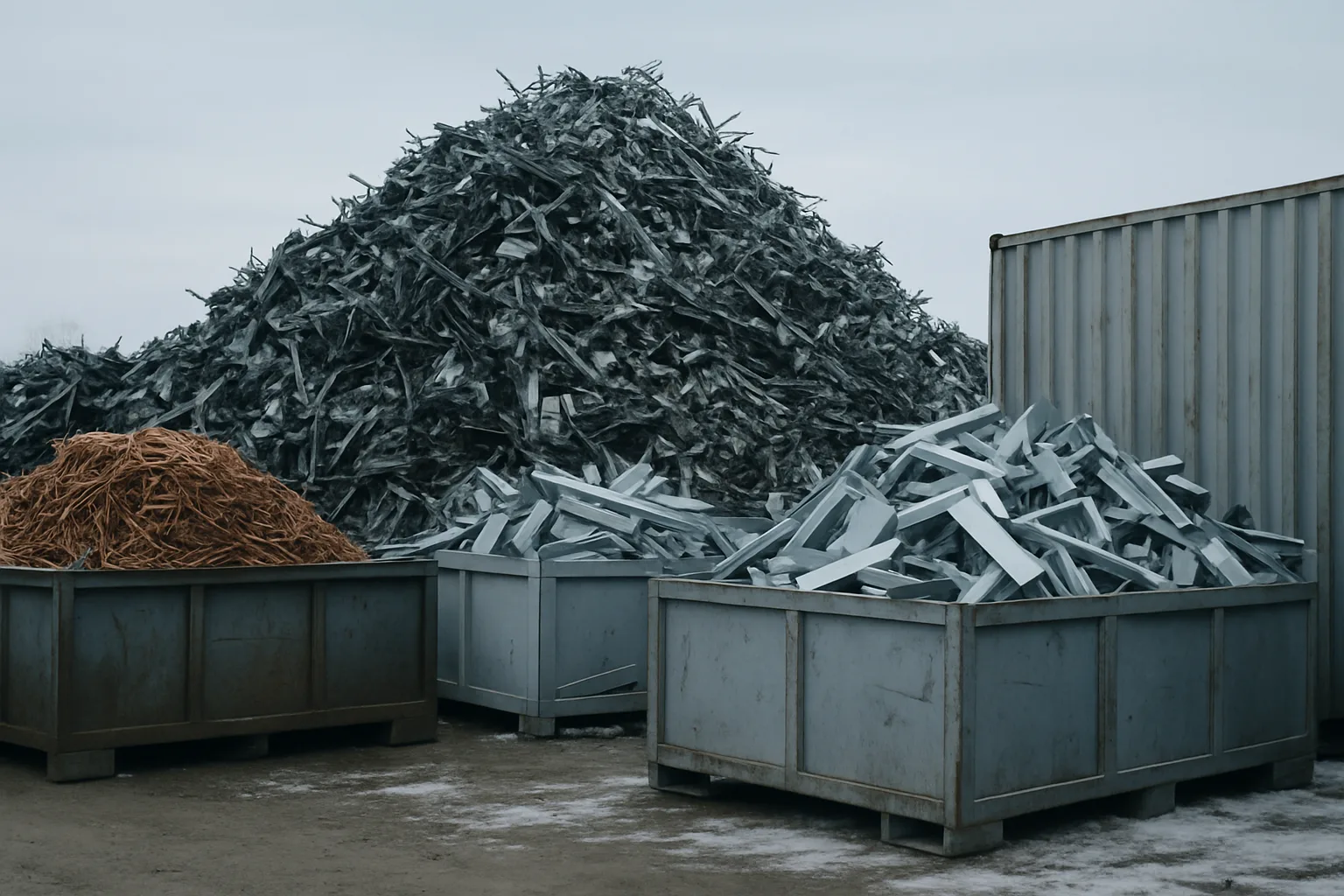
Ferrous vs. Non-Ferrous Scrap Metal: What Every Canadian Seller Needs to Know in 2026
Most people show up at a scrap yard with a truckload of mixed metal and a vague idea of what it's worth. That guesswork costs them money — sometimes a lot of it. Understanding the difference between ferrous and non-ferrous scrap metals is the single most important thing you can learn before you sell. It affects your price, your process, and who's going to buy from you.
Whether you're a contractor cleaning out a job site in Montreal, a fleet operator offloading worn equipment, or a homeowner with a pile of old appliances, this breakdown will help you sort your load and know what to expect when the steel scrap price today gets quoted back to you.
What Makes a Metal Ferrous or Non-Ferrous?
The distinction is simple but critical. Ferrous metals contain iron. Non-ferrous metals do not. That one difference drives two entirely different markets, two different pricing structures, and two different buyer pools.
The easiest way to sort on the spot: grab a magnet. Ferrous metals stick. Non-ferrous metals don't. It's not a perfect test — stainless steel can fool you — but it gets you 90% of the way there before you ever talk to a buyer.
Common ferrous metals include:
- Steel (structural, sheet, rebar)
- Cast iron
- Wrought iron
- Carbon steel and alloy steel
- Stainless steel (iron-containing, though non-magnetic grades exist)
Common non-ferrous metals include:
- Copper (wire, pipe, tubing)
- Aluminum (extrusions, sheet, cans, auto parts)
- Brass and bronze
- Nickel
- Lead
- Zinc
- Precious metals (gold, silver, platinum group)
Catalytic converters sit in a category of their own — they contain platinum group metals (PGMs) like palladium and rhodium, which are non-ferrous and trade at completely different levels than anything else in your load. If you're sitting on cats, treat them separately. They are not a line item on a general scrap quote.
How Ferrous and Non-Ferrous Scrap Prices Work Differently
This is where the money conversation gets real. Ferrous metals — primarily steel and iron — trade in bulk at lower per-tonne prices. Non-ferrous metals trade at higher per-pound or per-kilogram rates, and price swings can be dramatic depending on global commodity markets.
Checking the steel scrap price today is useful, but you need to understand what's driving that number. Steel pricing in Canada follows global steel demand, North American manufacturing output, and scrap export flow — particularly to mills in the U.S., Mexico, and overseas markets. In Quebec, proximity to both U.S. northeastern mills and Montreal's port infrastructure means prices can move quickly based on export demand.
Non-ferrous prices — especially scrap copper and scrap aluminum — track London Metal Exchange (LME) benchmarks. Copper is priced in USD per pound globally. Your yard in Montreal will apply a local spread and condition adjustment, but the underlying benchmark drives the conversation. That's why scrap metal prices today can look very different from what you saw quoted two weeks ago.
Why this matters when you're selling:
- Ferrous loads are priced by the tonne — you need volume to move the needle
- Non-ferrous loads are priced by grade and condition — a clean copper load versus insulated wire is a completely different quote
- Mixed loads get downgraded — sorting before you sell almost always pays off
- Timing matters — selling into a competitive market beats selling out of desperation
Why Sorting Your Load Before You Sell Matters in Quebec
Quebec scrap yards — like yards anywhere — will downgrade mixed or contaminated loads. If you bring in a trailer with copper wire mixed into steel beams and aluminum extrusions, you're giving the buyer room to quote you on the lowest common denominator. They're not going to sort it for free on their end and pass the savings back to you.
Spending an hour separating your ferrous from your non-ferrous before you sell is one of the highest-value hours you'll put in. In Montreal specifically, where construction and demolition volumes are high and competition among buyers exists, arriving with a sorted, documented load signals that you're a serious seller. Buyers respond to that.
For B2B sellers — contractors, demolition crews, fleet operators — documentation matters as much as sorting. Bill of lading, packing lists, photo documentation of condition, and accurate weight estimates all build buyer confidence. That confidence translates to better offers, especially when you're selling through a B2B scrap metal marketplace where multiple buyers see your listing at the same time.
If you're unsure where to start, explore Canadian scrap metal guides that walk through sorting, grading, and getting your load ready for sale.
The Old Way of Selling Scrap — and Why It Leaves Money Behind
Here's how most sellers in Canada still operate: they call one yard, get one quote, take it or leave it. Maybe they call a second yard if the first number felt low. That's not price discovery — that's guesswork dressed up as due diligence.
The problem is structural. When you have one buyer and they know you have one option, there's no competitive pressure. The quote reflects what the buyer wants to pay, not what the market will bear. This is especially common with non-ferrous loads — scrap copper and scrap aluminum — where condition and grade variation give buyers room to move the number without you knowing how far.
The fix is competition. When multiple vetted buyers see your load at the same time and bid against each other, you find out what the market actually thinks your material is worth. That's the entire premise behind the SMASH scrap metal auction model. No subscription fees. No lock-in. You only pay when you sell, and SMASH only wins when you do.
If you're a yard operator or a high-volume seller looking to move loads efficiently, sell your scrap metal on SMASH Recycling and see what competitive bidding does for your price discovery. More buyers in the room means the number you get is the number the market actually supports — not the number one buyer decided to offer on a slow Tuesday.
Catalytic Converters: A Non-Ferrous Category That Demands Separate Attention
No article covering non-ferrous scrap in 2026 is complete without addressing catalytic converters. Cats contain palladium, platinum, and rhodium — platinum group metals that have their own price benchmarks entirely separate from copper or aluminum markets. A single catalytic converter can be worth anywhere from a few dollars to several hundred, depending on the vehicle make, model, and the specific PGM content inside.
In Quebec, and across Canada, regulations around catalytic converter sales have tightened significantly. Documentation requirements — VIN matching, seller ID, transaction records — are now standard at any reputable buyer. If a buyer isn't asking for documentation, that's a red flag, not a convenience.
For sellers with volume — auto recyclers, dismantlers, fleet operators — the same competitive principle applies as with any non-ferrous load. A single buyer quoting your core inventory has no incentive to stretch. Platforms built around verified buyers and transparent bidding give you leverage. SMASH includes VIN lookup and serial tracking specifically for this category because documentation protects both sides of the transaction.
If you're based in or around Montreal and need help navigating Montreal scrap metal services, getting connected to buyers who specialize in non-ferrous and cat purchases makes a real difference in what you walk away with.
Making the Most of Scrap Metal Prices Today in Canada
The scrap metal prices today you see quoted online are reference points, not guarantees. Published prices reflect regional averages, and the actual number you get depends on grade, condition, volume, and how many buyers are competing for your material. Knowing this going in puts you in a better negotiating position.
For ferrous loads — structural steel, rebar, cast iron, sheet — volume is your friend. Small loads cost more to process relative to their value. If you can consolidate, do it. For non-ferrous, grade and cleanliness drive the conversation. Strip your wire. Pull your brass fittings. Keep your aluminum extrusions separate from your cast aluminum. These aren't minor distinctions — they're the difference between a grade-one price and a contaminated-load discount.
The Canadian scrap market in 2026 is active but not forgiving of sellers who show up unprepared. Buyers have options. You need to give them a reason to compete for your load, not a reason to discount it. Sell your scrap metal in Canada on GetMyScrap to connect with buyers who are ready to quote on properly documented, sorted loads — and skip the back-and-forth guesswork that eats into your return.
When you're ready to move your material, platforms like SMASH take the friction out of finding the right buyer. Whether it's a load of structural steel or a collection of non-ferrous cores, get a fair price for your scrap today by letting competition do the work instead of letting a single buyer set the ceiling.
Frequently Asked Questions
Q: What is the steel scrap price today in Montreal?
Steel scrap prices fluctuate daily based on global demand, North American mill activity, and local market conditions. Montreal prices track closely with U.S. northeastern and Quebec regional mill benchmarks. Always check current rates with a live buyer or platform — published averages are a starting point, not a final quote. Prices fluctuate — verify current rates before selling.
Q: How do I know if my scrap metal is ferrous or non-ferrous?
Use a magnet. Ferrous metals (steel, iron, cast iron) will stick. Non-ferrous metals (copper, aluminum, brass, lead) will not. Stainless steel can be an exception — some grades are non-magnetic but still contain iron. When in doubt, let your scrap buyer grade it, but sorting before you arrive almost always improves your quote.
Q: Are scrap metal prices in Quebec different from the rest of Canada?
Yes — regional pricing differences exist across Canada. Quebec pricing reflects local buyer competition, proximity to U.S. northeastern mills, and port access through Montreal for export loads. Non-ferrous metals like copper and aluminum follow global LME benchmarks but with regional spreads applied by local yards and buyers.
Q: What is the best way to sell scrap metal near me for cash in Montreal?
Sort your load by metal type, document your material with photos and weights where possible, and get quotes from more than one buyer. Using a platform that puts multiple vetted buyers in competition — like the SMASH scrap metal auction model — helps ensure you're seeing actual market value rather than one buyer's opening offer.
Q: Do I need documentation to sell catalytic converters in Quebec?
Yes. Quebec, like most Canadian provinces, requires documentation for catalytic converter sales — including seller identification and, increasingly, VIN matching to verify origin. Any reputable buyer will ask for this. Sellers with volume should use platforms that support serial tracking and photo documentation to streamline the process and protect both parties.
The ferrous and non-ferrous distinction isn't just academic — it's the framework that determines what your scrap is worth and who's going to buy it. Get your load sorted, get it documented, and get it in front of more than one buyer. If you're in Montreal or anywhere across Canada and ready to move material, request a pickup at getmyscrap.ca and stop leaving money on the table.
Stay sharp on market shifts and scrap metal pricing trends — follow SMASH on LinkedIn for weekly industry updates and insights straight from the North American scrap market.