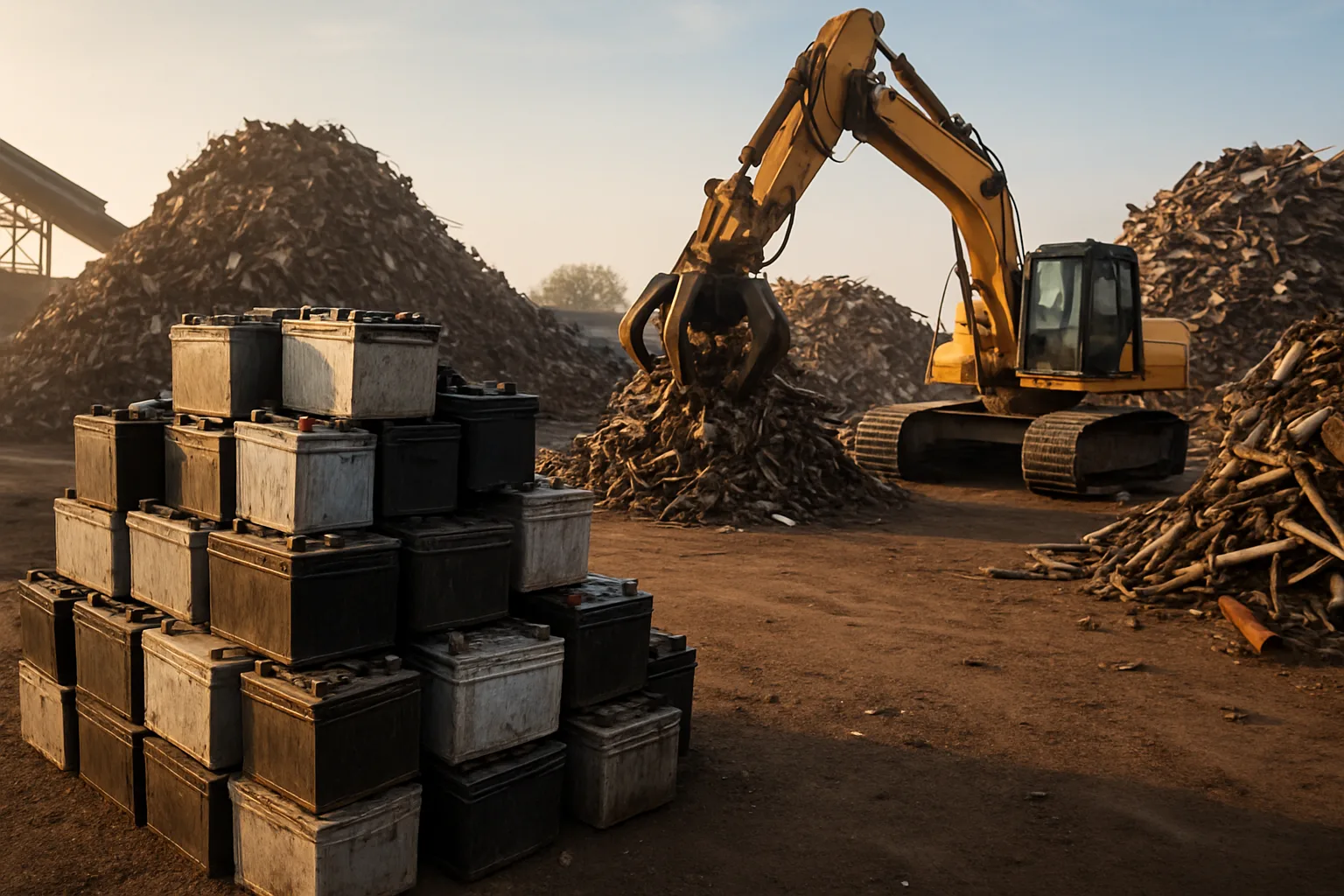
Lead-Acid Batteries Are Worth More Than You Think — Here's How to Cash In
Most people toss old lead-acid batteries in a corner and forget about them. That's leaving real money on the table. Lead is one of the most consistently recyclable metals in the scrap market, and lead-acid batteries — from cars, trucks, forklifts, and backup power systems — are packed with it. If you're sitting on a pile of dead batteries at your yard in Brandon or anywhere across Manitoba, you're sitting on recoverable value.
This guide walks you through what lead-acid batteries contain, what drives their scrap value, how the recycling process works, and how a sell your scrap metal in Canada on GetMyScrap approach through a proper B2B scrap metal marketplace can help you stop guessing and start getting paid fairly.
What's Actually Inside a Lead-Acid Battery
A standard 12-volt automotive lead-acid battery weighs between 15 and 25 kilograms. The majority of that weight is lead — typically making up 60–70% of the total battery mass. The rest is polypropylene casing, sulfuric acid electrolyte, and lead oxide paste coating the plates.
Here's a rough breakdown of what you're working with:
- Lead plates and grids: The heaviest component. Pure lead and lead alloys with antimony or calcium.
- Lead oxide paste: Covers the plates. Recoverable and processed separately.
- Polypropylene casing: The plastic shell. Most smelters recycle this too.
- Sulfuric acid: Neutralized and processed at licensed facilities — not something to handle carelessly.
Industrial and commercial batteries — think forklift batteries, telecom backup units, or UPS systems — are considerably heavier. A single forklift battery can weigh anywhere from 500 kg to over 1,500 kg. If you're accumulating those at a commercial or industrial site, the weight adds up fast and so does the recoverable lead content.
What Drives Lead Scrap Value in Canada
Lead prices move with the London Metal Exchange (LME), global demand from battery manufacturers, and the overall health of the automotive and energy storage sectors. As electric vehicles continue to scale, lead-acid batteries aren't disappearing — they're still used for starting, lighting, and ignition systems in most ICE vehicles and as auxiliary power in EVs. Demand for recycled lead remains strong because secondary smelting is significantly cheaper and less energy-intensive than primary production.
Several factors affect what you'll actually get paid per kilogram for your battery scrap in Canada:
- Lead content purity: Whole, intact batteries are valued differently than broken or drained ones.
- Volume: Larger loads attract more buyer interest and better pricing. A handful of batteries gets treated differently than a full pallet or truckload.
- Condition: Batteries that have been sitting, leaking, or cracked may require special handling — that affects your net return.
- Market timing: LME lead spot prices fluctuate. Knowing when to move your inventory matters.
- Buyer competition: One buyer quoting you is just one data point. Multiple buyers bidding is a market.
That last point is where most recyclers and scrap yards leave money on the ground. Calling one buyer and taking their number feels fast, but it's not price discovery — it's price acceptance.
The Lead-Acid Battery Recycling Process
Lead is one of the most recycled materials in the world — the recycling rate for lead-acid batteries in North America consistently sits above 95%. That's not an accident. The infrastructure exists, the economics work, and environmental regulations have made proper disposal both a legal requirement and a business opportunity.
Here's how the process typically works once batteries leave your yard:
- Collection and sorting: Batteries are sorted by type — automotive, industrial, sealed. Condition is assessed.
- Breaking and separation: Licensed smelters or processors break the batteries mechanically, separating the lead plates, paste, polypropylene, and acid.
- Lead smelting: The lead materials are smelted and refined into ingots or alloys. Secondary lead smelting uses roughly 35–40% of the energy required for primary production.
- Polypropylene recycling: The plastic casing is cleaned and pelletized for reuse in new battery cases or other plastic products.
- Acid neutralization: Sulfuric acid is either neutralized into water, converted to sodium sulfate, or processed for reuse in industrial applications.
If you're a yard operator in Brandon or elsewhere in Manitoba, you're not running the smelter — but understanding the downstream process helps you speak the same language as your buyers and understand why volume, condition, and documentation matter to them.
How a B2B Scrap Metal Marketplace Changes the Equation
The old way: you call your one buyer, they give you a number, you take it or leave it. You have no idea if that number reflects the actual market. You're negotiating blind.
A proper B2B scrap metal marketplace flips that dynamic. Instead of one buyer making you an offer, multiple vetted buyers compete for your load. That competition is what drives real price discovery — not guessing, not hoping, not a favor from a contact who may or may not be padding their margin.
SMASH — the Scrap Metal Auction Sales Hub — is built exactly for this. You document your inventory, upload photos, enter weights and battery counts, and put your load in front of qualified buyers through an auction format. Lead-acid batteries are a straightforward commodity with a liquid secondary market. More buyers bidding means better data on what your load is actually worth. You can get a fair price for your scrap today without cold-calling a list of contacts and hoping someone picks up.
SMASH also handles auto-invoicing and documentation, which matters when you're moving regulated materials like lead-acid batteries across provincial lines. Clean paperwork isn't just good practice — it's required by buyers and carriers operating at scale.
What to Know About Selling Lead Scrap in Brandon and Manitoba
Brandon is Manitoba's second-largest city and sits at the centre of a significant agricultural and industrial region. That means a consistent stream of lead-acid batteries from farm equipment, commercial vehicles, fleet operators, and industrial sites. If you're a yard operator or business owner in the region, you're likely accumulating batteries faster than you're moving them.
Manitoba's recycling infrastructure has expanded in recent years, but access to competitive buyers — particularly for non-ferrous materials like lead — can still be limited if you're relying on local-only options. That's exactly where a scrap metal auction platform gives you an edge. You're no longer limited to buyers who will drive to Brandon. You're opening your inventory to a broader network of vetted buyers across North America who compete for the load on its merits.
For those new to selling through an auction platform, the process is simpler than it sounds. You document your battery inventory — counts, approximate weights, condition — upload it with photos, and let the platform do the work. No guessing at prices. No back-and-forth phone calls. Platforms like SMASH are built for exactly this kind of commodity load.
If you want to explore Canadian scrap metal guides before you start, there's solid educational content on what to expect when selling different types of scrap — from catalytic converters to copper wire to lead batteries like these.
Practical Tips for Maximizing Your Lead Battery Scrap Value
Whether you're moving ten batteries or ten tonnes, these practices will help you get better outcomes:
- Weigh your loads before listing: Buyers bid on weight. Accurate weights get you more serious bids and fewer disputes at settlement.
- Document condition: Intact vs. cracked, leaking vs. dry — buyers price this differently. Photos resolve arguments before they start.
- Separate battery types: Automotive, industrial, sealed lead-acid, and gel batteries may attract different buyers at different price points. Don't lump everything together if you can avoid it.
- Don't wait for a full truckload if it's taking months: Partial loads still have value. A load sitting in your yard depreciates in condition and ties up your floor space.
- Understand your transport costs: Net price after freight is what matters. Factor that in when comparing buyer offers.
- Check current rates before you move: Lead prices move. What you heard last month may not reflect today's market.
More buyers seeing your load is always better than fewer. That's not complicated — it's just how markets work. A scrap metal auction platform like SMASH makes that access practical, not theoretical.
Visit smashrecycling.ca to learn how the auction process works for commodity loads like lead-acid battery scrap.
When you're ready to move your material, sell your scrap metal in Canada on GetMyScrap and connect with buyers who are ready to compete for your load — not just quote it.
Frequently Asked Questions
Q: How much are lead-acid batteries worth as scrap in Canada?
Lead-acid battery scrap value depends on the current LME lead price, your battery's condition, and total weight. Prices fluctuate regularly — always check current market rates before moving your inventory. Using a B2B scrap metal marketplace like SMASH gives you competitive bids rather than a single buyer's estimate, which improves your price discovery.
Q: Can I sell lead-acid batteries through a scrap metal auction platform in Brandon?
Yes. A scrap metal auction platform like SMASH allows you to list battery loads from Brandon or anywhere in Manitoba and reach vetted buyers across North America. You're not limited to local buyers, which matters when local options are limited or prices are below market.
Q: What's the best way to prepare lead-acid batteries for sale at a scrap yard?
Keep batteries intact where possible — broken or leaking batteries require special handling and may net lower prices. Weigh and count your load, separate by battery type (automotive vs. industrial), and document condition with photos. Good documentation builds buyer confidence and speeds up settlement.
Q: Are there environmental rules for selling lead-acid battery scrap in Manitoba?
Yes. Lead-acid batteries are regulated materials. In Manitoba, they must be handled by licensed processors and cannot be landfilled. When selling through a reputable platform or buyer, proper chain-of-custody documentation and manifests are typically required — this protects both the seller and buyer and ensures compliance with provincial regulations.
Q: How is scrap metal recycling in Manitoba different from other provinces?
Manitoba has its own provincial recycling regulations and extended producer responsibility programs that affect battery handling and documentation requirements. Buyers and processors operating in the province need to be licensed accordingly. Using a vetted buyer network — such as through a B2B scrap metal marketplace — helps ensure you're dealing with buyers who understand and comply with Manitoba-specific rules.
If you're in Brandon or anywhere across Manitoba with lead-acid batteries piling up, the value is there — you just need the right buyers competing for it. Get a fair price for your scrap today and request a pickup at getmyscrap.ca.
Stay current on scrap metal market trends and industry news — follow SMASH on LinkedIn for regular updates on lead, copper, aluminum, and the North American scrap market.