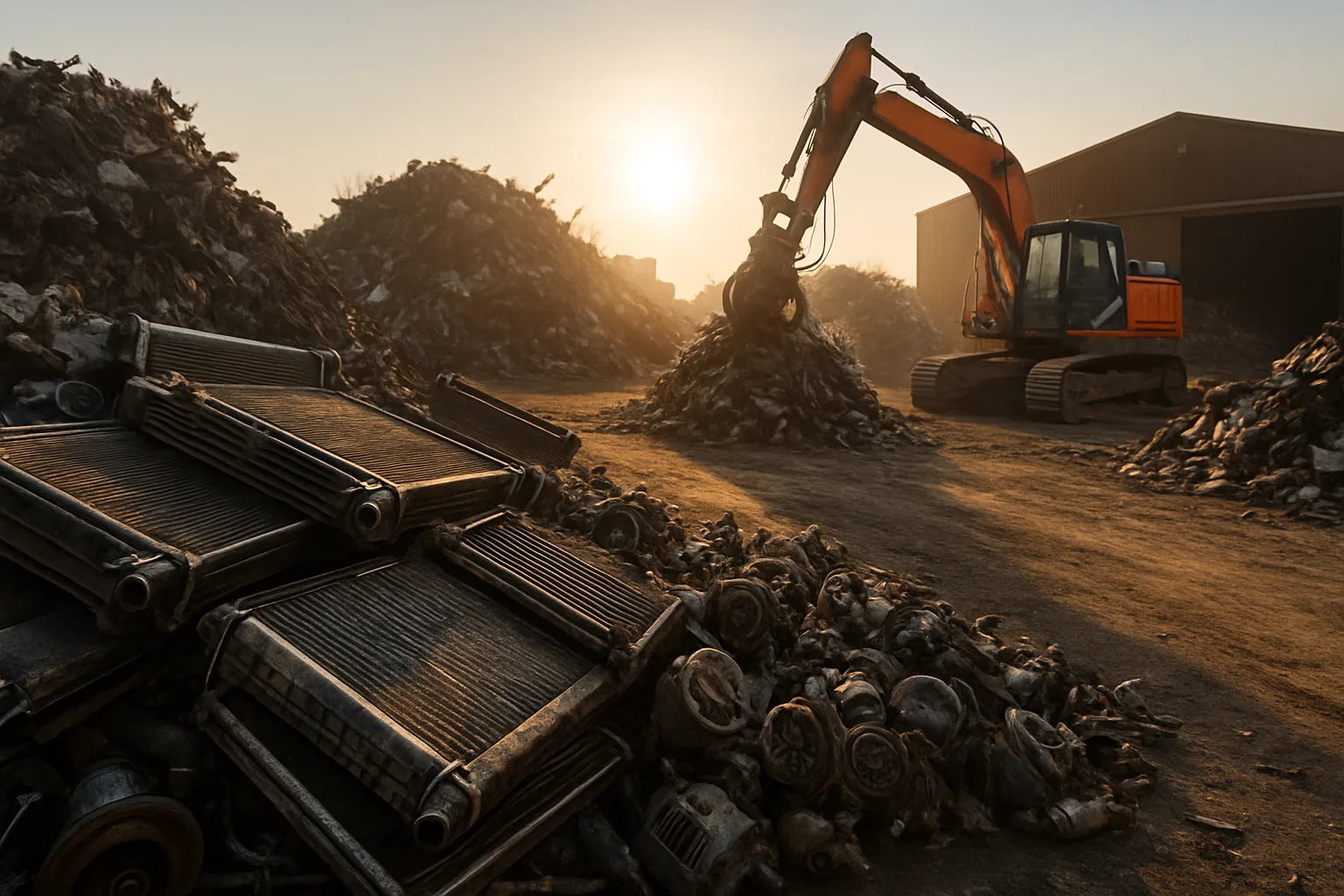
What Actually Happens to Your Old Radiator or Alternator at the Scrap Yard
Most people drop off an old radiator or a dead alternator at a scrap yard and never think about it again. But what happens after you hand it over? The metals inside those parts — copper, aluminum, steel, sometimes platinum-group metals — don't just disappear. They get sorted, processed, and re-enter the supply chain as raw material. Understanding that process helps you sell smarter, especially when scrap metal prices in Prince George shift based on what buyers actually want from those components.
Auto parts recycling is one of the most active segments in the scrap industry right now. With new vehicle production still navigating parts shortages and material cost pressures in 2026, demand for recovered metals from automotive components remains strong. If you have a pile of cores sitting in your yard or shop, knowing the value inside each part puts you in a better position when it's time to sell.
The Metal Breakdown: What's Inside Common Auto Parts
Not all auto parts are created equal — not when it comes to scrap value. The metal composition of each component determines how a buyer values it and how it gets processed after collection.
Radiators are one of the more straightforward parts to recycle. Most passenger vehicle radiators are aluminum-core with plastic end tanks, though older models use copper and brass construction. Copper-brass radiators carry a noticeably higher scrap value than aluminum units because copper scrap price today tends to run well above aluminum on a per-pound basis. When you bring in a copper-brass radiator, a good buyer will separate the brass headers from the copper tubes before pricing — don't let anyone lump it all together at a lower rate.
- Copper-brass radiators: Higher value, often priced by copper content
- Aluminum radiators: Lower per-pound rate, but more common in modern vehicles
- Contaminated radiators (with plastic, rubber, or fluid residue): Often downgraded — drain and clean before drop-off where possible
Alternators are a mixed-metal part. The housing is typically cast aluminum or steel. Inside, there's a copper winding (the stator), an iron rotor, and various small steel components. Some buyers purchase whole alternators as cores; others prefer to shred or dismantle them for the copper winding specifically. The copper content is where the value lives, but you usually won't see copper-grade pricing on a whole alternator — it gets averaged out across the mixed material.
How Scrap Yards Actually Process These Parts
Once a part like a radiator or alternator arrives at a facility, it moves through a sorting and grading process before it goes anywhere near a shredder or smelter. Yards doing this right aren't just weighing everything on a single scale — they're separating materials by type, grade, and contamination level.
For radiators, a common step is removing the plastic tanks before the aluminum or copper core gets processed. Some facilities will slice the core and press it into bales. Copper-brass radiators may get sent to a secondary processor that specializes in non-ferrous separation. The goal is to recover as much clean metal as possible — contaminated or mixed loads reduce recovery yield, which is why buyers discount them.
Alternators typically go one of two routes. Whole-core buyers (often rebuilders) may purchase them for remanufacturing rather than scrap — that's a different market entirely. If they're going to scrap, they'll either be shredded whole or hand-dismantled for the copper stator windings. Larger operations use automated dismantling lines; smaller yards do it manually. Either way, the copper comes out, the iron and steel get separated, and the aluminum housing goes its own direction.
Platforms like SMASH Recycling — where verified buyers bid on your metal are changing how these loads get sold upstream. Instead of one buyer quoting one price on a mixed load of cores, the auction format puts the lot in front of multiple vetted buyers simultaneously. That competition helps reveal the actual market — which matters more when you're moving volume.
Scrap Metal Prices in Prince George: What Drives the Numbers
If you're selling auto parts scrap in Prince George, you're operating in a regional market that's influenced by both local demand and global commodity prices. Scrap metal prices in Prince George for copper, aluminum, and ferrous materials track international exchange benchmarks but get adjusted for local factors — freight costs, regional buyer competition, and the volume of material moving through northern British Columbia at any given time.
Copper is consistently the most valuable common scrap metal. Whether it's coming out of a radiator, a transformer, or electrical wire, copper scrap price today typically commands a significant premium over aluminum and steel. Aluminum from automotive parts — radiators, engine blocks, transmission housings — sits in the mid-range. Steel and cast iron from engine components are high-volume but lower per-pound value.
A few factors that directly affect what you'll get quoted in Prince George:
- Material cleanliness: Clean copper versus copper with attached steel or plastic nets a higher per-pound rate
- Volume: A full truckload gets a different conversation than a few loose pieces
- Market timing: Commodity prices shift — what copper fetches today may not match next week
- Buyer competition: In markets with fewer active buyers, pricing pressure is lower — more buyers mean better price discovery
If you're unsure what your pile of auto parts is worth, the worst move is calling one buyer and taking the first number you hear. Sell your scrap metal in Canada on GetMyScrap and get visibility into what multiple buyers are willing to pay before you commit.
Disclaimer: Scrap metal prices fluctuate based on commodity markets. Always check current rates before selling.
Catalytic Converters: The High-Value Piece Most Sellers Underestimate
If you're pulling apart a scrapped vehicle, the catalytic converter deserves its own conversation. Cats contain platinum, palladium, and rhodium — platinum-group metals (PGMs) that have significant market value and are actively sought by specialty refiners. This is not a part you want to throw in with a general scrap load at base ferrous rates.
The catalytic converter auction market has become a serious channel for moving cats at proper value. A catalytic converter auction format — like what SMASH facilitates — puts verified PGM buyers and processors in direct competition for your inventory. That's a very different outcome than handing cats over to a generalist yard that may not have the refining relationships to pay you the full recovered value.
For sellers in Prince George scrap metal services, understanding that cats require a different selling approach than bulk ferrous is one of the higher-value insights in this article. Don't treat them the same as a steel bumper. They're not.
Proper documentation matters here too. Serial numbers, photos, and accurate counts are standard practice for moving cats through a transparent auction process. It protects you as the seller and gives buyers the confidence to bid competitively.
Scrap Metal Recycling in British Columbia: Regulatory Context for 2026
Scrap metal recycling in British Columbia operates within an evolving regulatory environment. In 2026, yards operating across the province are subject to documentation requirements around certain high-value or regulated materials — catalytic converters being a primary example. Sellers moving volume should be familiar with what records are expected at the point of sale.
The broader picture in British Columbia is one of increasing scrutiny on metal theft and diversion, which has pushed legitimate recyclers toward more documented, traceable transactions. This isn't a barrier — it's actually a feature if you're selling through a proper channel. Documentation protects you and makes your loads more attractive to serious buyers who need clean chain-of-custody records.
For auto dismantlers, body shops, and fleet operators in northern British Columbia, this is worth paying attention to. The days of moving mixed auto parts with minimal paperwork are being replaced by documented transactions that benefit sellers who do things by the book. Platforms built around transparency — photo documentation, serial tracking, vetted buyer networks — align with where the industry is heading.
If you want to get a fair price for your scrap today, working with buyers who understand compliance and documentation is increasingly the smart play — not just for legal protection, but because those buyers tend to pay better for clean, documented material.
How to Get More for Your Auto Parts Scrap
Selling radiators, alternators, catalytic converters, and other auto parts for scrap doesn't have to be a guessing game. A few practical steps consistently produce better outcomes:
- Separate by material type before you sell. Copper-brass radiators and aluminum radiators should not go into the same pile. Mixed loads get priced at the lower material's rate.
- Remove contaminants where practical. Drain fluids, cut off plastic tanks, strip rubber hoses. Clean material gets better pricing.
- Keep cats separate and documented. Photograph them, note the serial numbers, and sell through a channel that specializes in PGMs.
- Don't accept the first number from one buyer. More buyers mean better price discovery. That's not a theory — it's how competitive markets work.
- Check current prices before you sell. Copper, aluminum, and PGM prices move. Selling when the market is up versus down makes a real difference on volume loads.
Whether you're a Prince George auto recycler moving regular loads or an individual clearing out a shop, the same principle applies: preparation and competition produce better results than convenience and complacency.
For industry-level selling, explore Canadian scrap metal guides that walk through how to maximize value across different material categories — from bare bright copper to shredder-ready steel.
When you're ready to move your material, scrap metal prices in Prince George and across the country respond to the same forces: supply, demand, commodity markets, and buyer competition. SMASH puts the competition piece directly in your corner — vetted buyers, auction format, full transparency, no subscription fees. The old way was one phone call and a take-it-or-leave-it number. That's not good enough anymore.
Get a fair price for your scrap metal in Canada — request a pickup at getmyscrap.ca and find out what your auto parts are actually worth in today's market.
Frequently Asked Questions
Q: What are scrap metal prices like in Prince George right now?
Scrap metal prices in Prince George fluctuate with global commodity markets. Copper consistently commands the highest per-pound rate among common non-ferrous metals, followed by aluminum, then steel. For current pricing, check directly with a buyer or platform before selling — posted rates can change weekly or even daily based on market conditions.
Q: Is a copper-brass radiator worth more than an aluminum radiator for scrap?
Yes, significantly. Copper scrap price today runs well above aluminum on a per-pound basis, and a copper-brass radiator contains a meaningful amount of recoverable copper. Always separate copper-brass and aluminum radiators before selling — mixed loads get priced at the lower material's rate, which costs you money.
Q: How should I sell catalytic converters in Prince George?
Catalytic converters should be sold through a specialized channel, not lumped into a general scrap load. Cats contain platinum-group metals with real market value, and a catalytic converter auction format — where vetted PGM buyers compete for your inventory — typically produces better outcomes than a single-buyer transaction. Document serial numbers and take photos before selling.
Q: Are there regulations around selling scrap metal in British Columbia in 2026?
Yes. British Columbia has documentation requirements for certain regulated materials, including catalytic converters. Sellers moving volume should expect to provide identification and transaction records at the point of sale. Working with a legitimate, documented buyer channel protects you and ensures your loads meet compliance standards.
Q: How do I find a scrap yard near me in Prince George that pays fair prices?
Searching for a scrap yard near me open is a reasonable starting point, but the better question is which buyer offers the most competitive price. Rather than accepting the first number from one local yard, consider platforms like SMASH that bring multiple vetted buyers into competition for your material — that structure tends to produce better price discovery than a single-buyer phone call.
Stay current on scrap metal market trends and industry news by following SMASH on LinkedIn — regular updates on metal prices, regulatory changes, and best practices for sellers across North America.