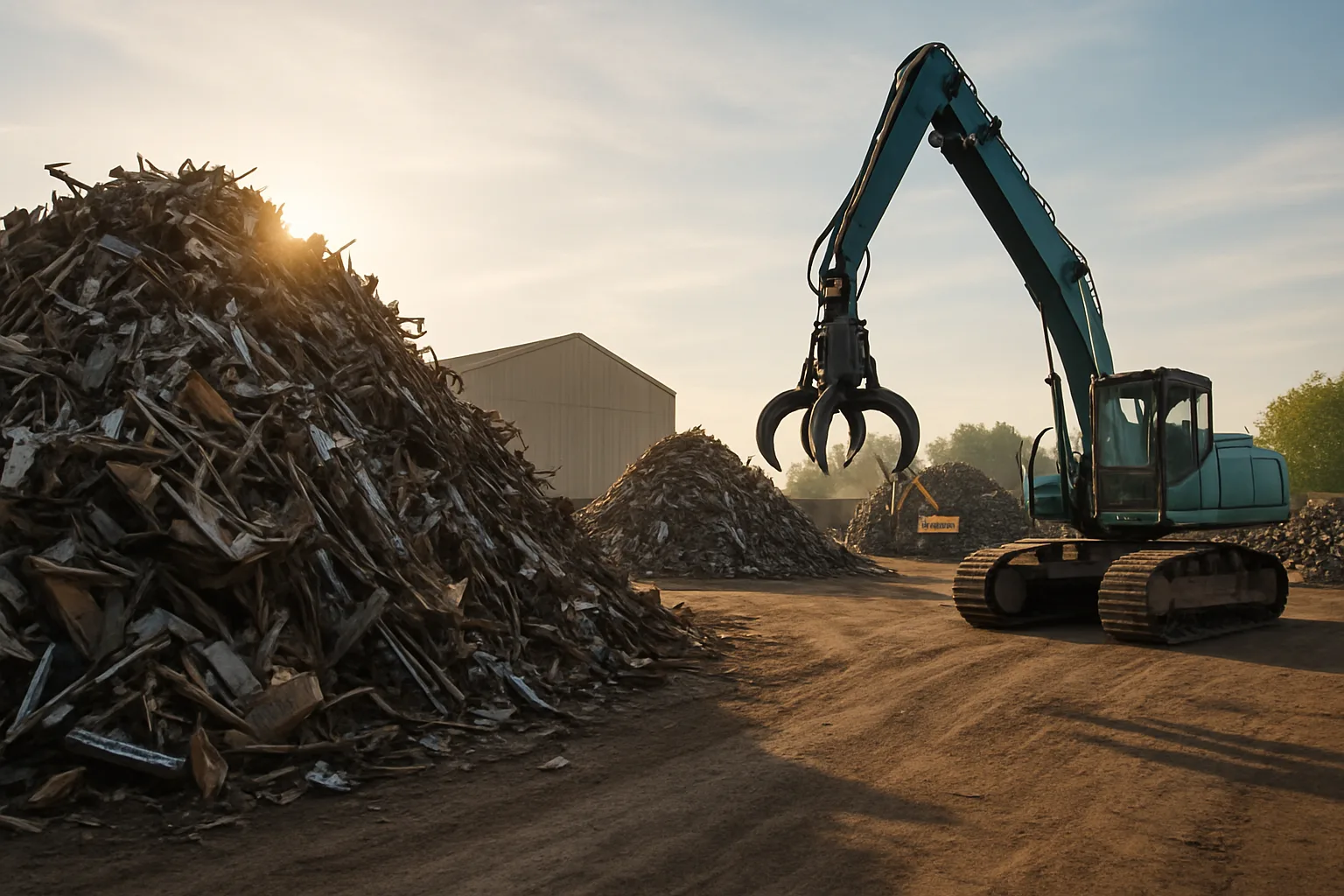
What Happens After You Drop Off Your Scrap — And Why It Affects Your Payout
Most people think the hard part is hauling their scrap to the yard. It's not. The part that actually determines how much money lands in your pocket happens after you unload — when the yard weighs, sorts, and grades your material. If you don't understand that process, you're flying blind on price. And in a market where the best scrap metal prices in Prince George can swing significantly based on grade alone, blind isn't a good place to be.
This guide breaks down exactly how recycling yards evaluate your load — the scales, the grade calls, the deductions — and how platforms like SMASH help you get competitive bids for your scrap in Canada by bringing documented, graded inventory in front of multiple vetted buyers at once.
The Scale Is the Starting Point — But It's Not the Whole Story
Every transaction at a scrap yard starts with weight. Drive-on truck scales handle full loads. Platform scales handle smaller drops — a box of copper fittings, a pile of aluminum extrusion, a stack of catalytic converters. The weight you see on the ticket is the gross weight, and most yards will deduct for moisture, dirt, or non-metallic attachments depending on what you brought in.
Weight alone doesn't determine your payout. A tonne of clean #1 copper and a tonne of contaminated mixed copper wire are not the same cheque. The grade assigned to your material is what applies the actual price — and that grade is set by the yard's buyer, often in seconds, based on visual inspection and experience.
Here's what that grading process typically looks at:
- Cleanliness: Is the metal free of attachments, insulation, coatings, or other materials?
- Alloy type: Especially important for aluminum — 6061 extrusion and cast aluminum don't price the same.
- Form factor: Sheet, bar, turnings, shredded, cast — all affect price and handling cost for the buyer.
- Contamination level: Mixed loads get downgraded. Sometimes significantly.
- Preparation: Stripped wire grades better than insulated wire. Clean iron grades better than painted or coated iron.
If you're dropping mixed non-ferrous material and expecting top-grade pricing, you'll be disappointed. Yards buy risk, and contaminated loads carry more of it.
How Scrap Copper Is Graded — and What It Means for Your Cash
Copper is where grade differences really bite. The spread between the top grade and a lower grade on the same day can be substantial — sometimes several hundred dollars per tonne. If you're selling scrap copper in Prince George or anywhere across British Columbia, understanding these tiers matters.
Common copper grades you'll encounter at most yards in Canada:
- Bare bright (#1 copper): Clean, uncoated, unalloyed copper wire — the top tier. No solder, no insulation, no fittings.
- #2 copper: Includes copper pipe, bus bar, and fittings that may have minor solder or slight oxidation.
- Insulated copper wire: Graded by estimated copper recovery percentage — heavy insulated wire yields more copper than thin communications wire.
- Copper mixed / contaminated: Includes non-copper attachments, painted material, or heavily oxidized pieces. Lowest copper pricing tier.
A yard buyer makes these calls visually, but experienced sellers know how to prep their loads to hit a better grade. Strip your wire before you go if the volume justifies the labour. Remove fittings where possible. Separate your alloys. That prep work has a direct dollar value when you're trying to find the best scrap metal prices in a competitive market.
Aluminum and Catalytic Converters — High-Value Material, Complex Grading
Aluminum is one of the more graded-intensive metals at any Canadian scrap yard. There are dozens of aluminum alloys, and buyers pay very differently for them. Scrap aluminum sold as "mixed aluminum" gets a blended, conservative price. The same material separated into extrusion, cast, sheet, and wheels will return more — because the buyer can actually use what they're buying with confidence.
Catalytic converters are in their own category entirely. Every cat gets assessed based on the precious metal content inside — platinum, palladium, and rhodium. Yards typically use one of three methods:
- Visual ID + published assay data: Using VIN lookups or part number databases to identify the converter and apply a known assay value.
- XRF analysis: A handheld X-ray fluorescence gun reads the substrate composition directly. More accurate, used by larger buyers.
- Bulk sampling and smelter returns: High-volume buyers send loads to a smelter and receive an assay report on the full batch.
This is exactly why platforms like SMASH use serial tracking and photo documentation for catalytic converter inventory. When your cats are documented with photos and serial numbers, buyers bid on what they can actually verify — not on what they think they're getting. That confidence in the data drives better price discovery. If you're looking to sell your scrap metal in Canada on GetMyScrap, proper documentation on your cats makes a real difference.
Why Grade Disputes Happen — and How to Protect Yourself
Grade disputes are one of the most common frustrations in the B2B scrap metal marketplace. A seller brings in what they believe is #1 copper. The yard grades it as #2. The difference isn't just academic — it affects the cheque. These disputes happen for a few reasons:
- The seller didn't know the grading standards before they prepped the load.
- The material was borderline and the yard applied a conservative grade.
- There was no third-party documentation to reference — just a verbal agreement at the scale.
- The seller had no leverage because they were selling to a single buyer.
The best protection is documentation and competition. Photograph your load before it leaves your yard. Know the grades going in. And wherever possible, get more than one buyer looking at your material. That's the core of how SMASH operates — vetted buyers, documented inventory, and a competitive auction format that replaces guesswork with market price discovery. Sellers across British Columbia are using this approach instead of the old one-call-one-buyer model.
If you want to understand how other sellers across the country are approaching this, explore Canadian scrap metal guides for practical breakdowns on grades, prices, and prep strategies.
How Weighing and Grading Differs for B2B Sellers vs. Walk-In Traffic
If you're a recycling yard, a demolition contractor, or a business generating regular scrap volume, the grading conversation looks different than it does for a walk-in with a truck bed full of mixed metal. B2B sellers typically move larger loads, and those loads are worth negotiating harder on — both in terms of grade assignment and price.
In a B2B scrap metal marketplace, documented inventory matters more because buyers are often bidding without being physically present at the material. Packing lists, photos, weights, and grade specifications replace the in-person inspection. A well-documented load — one where the seller has itemized their non-ferrous by grade, weighed it separately, and provided photos — is a fundamentally different asset than a load described as "mixed non-ferrous, approx. 2 tonnes."
For Prince George yards and contractors moving regular volume, this is a meaningful shift. The Prince George scrap metal services available through platforms like SMASH are built around this kind of structured selling — inventory tools, VIN lookup for cats, auto-invoicing, and a buyer pool that competes on price rather than one buyer setting the number unilaterally.
Whether you're searching for how to sell scrap metal near me for cash or looking to move a large industrial load, the process starts the same way: know your material, document it, and make sure more than one buyer sees it.
What You Can Do Before You Arrive at the Yard
Prep work before you hit the scale is the single most controllable variable in your scrap payout. The yard controls the scale. The market controls the base price. You control how clean and separated your material is when it gets graded.
Practical steps that protect your grade:
- Separate your metals before you go. Don't mix copper, aluminum, and steel in the same bin if you can avoid it.
- Remove non-metallic attachments. Rubber insulation, plastic fittings, wood blocking — all of it detracts from your grade.
- Photograph your load. Especially for high-value material like cats or non-ferrous. It's a five-minute step that creates a record.
- Know your grades going in. Bare bright copper, #1 copper, #2 copper — look it up before you arrive so you can have an informed conversation at the scale.
- Ask about the yard's moisture or contamination deductions upfront. Some yards apply standard deductions on certain grades. Know what to expect.
- Weigh your loads yourself if possible. A certified truck scale ticket before you leave your site gives you a reference weight for the transaction.
If you're moving scrap metal regularly — from a shop, a job site, or a yard — these habits compound. Better prep means better grades. Better grades mean better payouts per tonne. Over a full year of regular loads, that adds up to real money. Whether you're selling scrap metal downtown or hauling out of a rural operation north of the city, the discipline is the same. Ready to get a fair price for your scrap today? Start with what you control.
Frequently Asked Questions
Q: How do I get the best scrap metal prices in Prince George?
Prep your material before you go — separate metals by type, remove non-metallic attachments, and document higher-value items like catalytic converters with photos. Then make sure more than one buyer sees your load. Platforms like SMASH connect sellers with multiple vetted buyers, which creates real competition on price rather than a single take-it-or-leave-it offer.
Q: What's the difference between #1 and #2 copper at a scrap yard?
#1 copper (bare bright) is clean, uncoated, unalloyed wire with no solder or insulation. #2 copper includes pipe, bus bar, and fittings that may have minor oxidation or small amounts of solder. The price difference between grades can be significant — sometimes hundreds of dollars per tonne — so knowing which grade your material qualifies for before you arrive is worth the homework.
Q: How do scrap yards grade catalytic converters?
Most yards use visual ID combined with published assay databases or part number lookups to estimate precious metal content. Larger buyers use XRF analysis for on-the-spot readings. Serial number tracking and photo documentation — features built into platforms like SMASH — give buyers more confidence in what they're bidding on, which generally supports better price discovery for the seller.
Q: Can I sell scrap metal near me for cash in Prince George?
Yes. Prince George has active scrap buying operations, and sellers across British Columbia can also access broader buyer networks through online platforms. Cash transactions are common for smaller loads at local yards; larger B2B loads often settle by cheque or EFT. Check current rates before you go — prices fluctuate with commodity markets and change frequently.
Q: Do scrap yards deduct for moisture or contamination?
Many do. Standard deductions apply to certain grades — insulated wire, shredded material, and loads with visible moisture or non-metallic attachments. Ask about the yard's deduction policy before you unload. Better yet, prep your load to minimize deductions by separating and cleaning your material at the source.
Scrap metal prices fluctuate with global commodity markets. All price information referenced here is general in nature. Check current rates directly with your buyer or platform before making selling decisions.
If you're ready to stop guessing and start selling with documentation and competition behind you, sell your scrap metal in Canada on GetMyScrap and see what a vetted buyer network looks like in practice. Prince George sellers and operations across British Columbia are already making the shift.
Stay current on scrap metal market conditions and industry updates — follow SMASH on LinkedIn for practical insights without the noise.