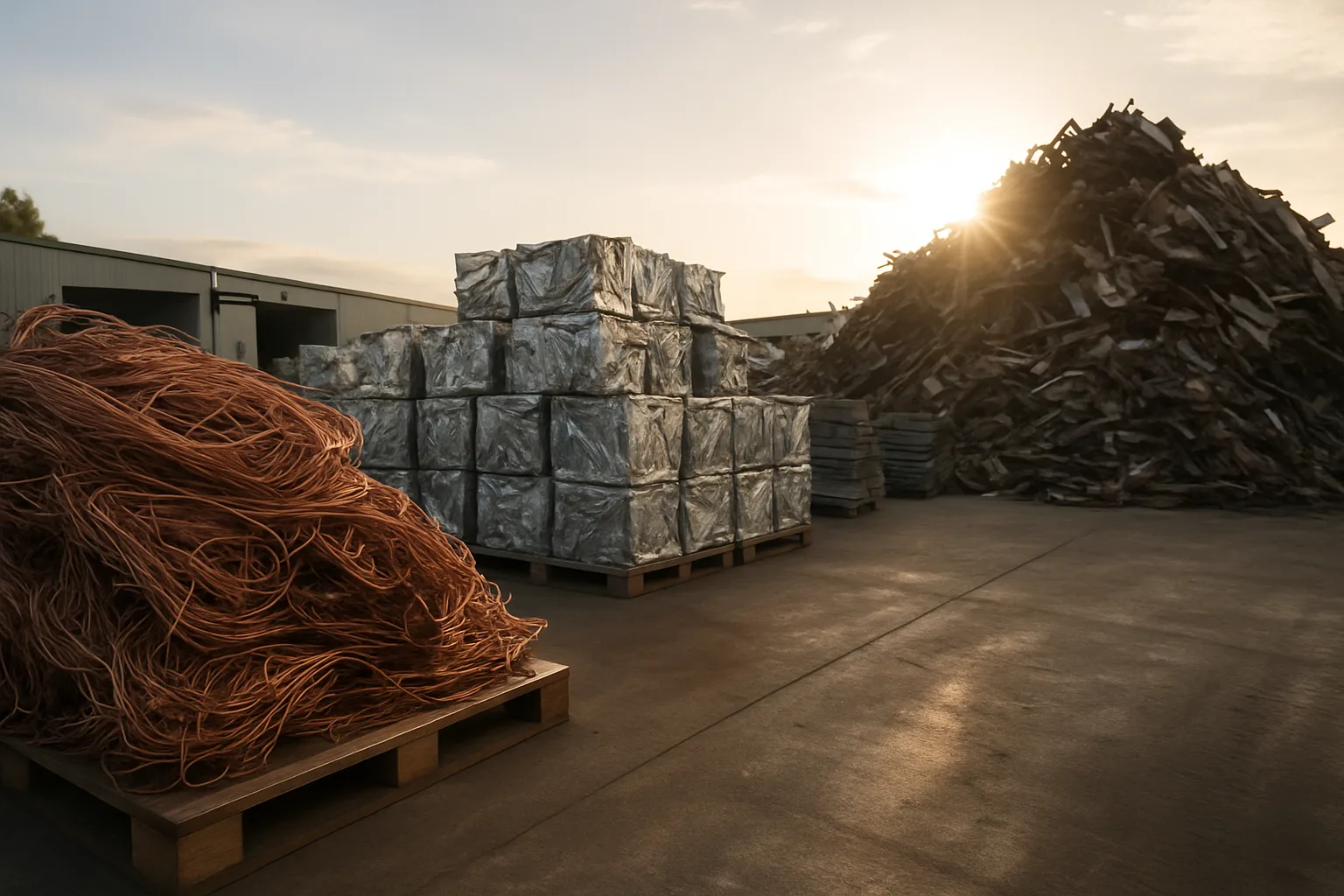
What Actually Happens When You Drop Off Scrap Metal at a Yard
Most people hand over a load of scrap and take whatever number the yard gives them. No questions asked. But if you've ever wondered why two yards quote you different prices for the same material — or why your payout felt lower than expected — the answer usually comes down to how the yard weighs and grades your load. Understanding that process puts money back in your pocket.
This isn't complicated science. But it is a system with real rules, and knowing those rules matters — whether you're a homeowner cleaning out a garage in Longueuil, a contractor hauling copper demo scrap, or a business running regular loads of non-ferrous material. The B2B scrap metal marketplace is built on price discovery, and price discovery starts at the scale.
How Recycling Yards Weigh Your Load
Every licensed recycling yard uses a certified scale — usually a truck scale (also called a weigh bridge) for large loads, or a floor scale for smaller material. You drive in, get weighed full (gross weight), drop your load, and drive out empty (tare weight). The difference is your net weight. Simple in theory. In practice, there are a few things that affect your payout before you even get to grading.
Moisture and contamination add dead weight. A load of scrap steel that got rained on weighs more than the same load bone dry — and you're not getting paid for water. Yards know this. Some will make deductions for wet material, especially on loads of shredded or loose scrap. The same applies to dirt, oil residue, attached hardware, and non-metallic components that haven't been removed.
- Gross weight: Your vehicle plus the load
- Tare weight: Your empty vehicle
- Net weight: What you actually get paid on
- Deductions: Moisture, contamination, or mixed material penalties
Scales at reputable yards are certified and inspected — usually by provincial Weights and Measures authorities. If you're running regular volume in Quebec, you're entitled to ask for a printed scale ticket. That ticket is your record. Keep it. It's the foundation of any dispute if a payout doesn't match what you expected.
How Yards Grade Scrap Metal — And Why It Affects Your Price
Weight gets you in the door. Grading determines what you're actually paid per pound or per kilogram. Every major metal category has established grades — copper, aluminum, and steel all have multiple tiers, and the difference between grades can mean a significant swing in price per unit of weight.
Grading is done by a yard employee (sometimes called a grader or a metals buyer) who visually inspects your material, checks for contamination, and assigns a grade based on industry standards. In North America, copper grades are commonly referenced using Institute of Scrap Recycling Industries (ISRI) terminology — Bare Bright, #1 Copper, #2 Copper, and so on. Aluminum has its own tier system: clean cast, dirty cast, extruded, painted, mixed. The cleaner and more uniform your material, the higher the grade and the better the price per unit.
Here's what affects grading on common materials:
- Copper: Bare Bright copper (clean, uncoated wire) pays top dollar. Insulated wire, corroded pipe, or copper mixed with solder drops to #2 or lower.
- Aluminum: Clean extrusion (like window frames or door frames with no paint) grades higher than cast aluminum with attachments, or mixed aluminum with plastic components.
- Steel and iron: Heavy melt, light iron, shredded — grades are based on thickness and density. Thin sheet metal grades differently than structural steel or cast iron.
- Catalytic converters: Graded by make, model, and precious metal content. A high-value cat from a large diesel vehicle is worth significantly more than a spent cat from a small economy car.
For scrap metal recycling in Quebec — and across Canada — yards apply these grading standards consistently, but the buyer's interpretation can vary. That's exactly why selling through a scrap metal auction platform changes the equation. When multiple vetted buyers grade and bid on the same documented load, you get a real market price — not one buyer's interpretation.
The Difference Between a Good Grade and a Good Price
Getting a fair grade is step one. Getting a fair price for that grade is step two. These are separate problems, and most sellers conflate them. A yard can grade your copper accurately as #1 and still offer you a price that's below what the market supports that week. Without competing offers, you have no way to know.
This is where the old model breaks down. One yard, one buyer, one phone call. You're negotiating blind. The yard knows the current commodity price. You might not. Platforms like SMASH were built specifically to close that information gap. When you list a load on a get competitive bids for your scrap in Canada platform like SMASH, vetted buyers see the same documented inventory — photos, weights, grades, serial numbers where applicable — and bid competitively. That's how real price discovery works.
If you're running loads out of Longueuil or anywhere else in the province, you already know that the spread between what different buyers will offer can be meaningful. That spread isn't random — it reflects each buyer's current need, their processing capacity, and their margin targets. Competition surfaces the best of those offers.
How Photo Documentation and Inventory Tools Change the Game
Grading disputes happen. A yard grades your load one way, you think it should be higher. Without documentation, you're arguing your memory against their scale ticket. With documentation, you have a case.
Modern platforms designed for the B2B scrap metal marketplace build documentation into the process from the start. SMASH, for example, uses photo documentation and inventory tracking tools that let sellers record what they have before it goes to a buyer. Copper wire lots are photographed. Catalytic converters are logged by serial number or VIN lookup. Aluminum loads are described by alloy and condition. That documentation travels with the load — it's visible to every buyer in the auction, and it sets clear expectations before anyone places a bid.
This matters for both sides. Buyers who see well-documented inventory bid with more confidence, which often means stronger bids. Sellers who document properly avoid post-sale disputes about grade and condition. The paperwork — BOLs, packing lists, scale tickets, photos — isn't bureaucracy. It's protection.
If you want to sell your scrap metal in Canada on GetMyScrap, the documentation process is straightforward and guided. You don't need to be an expert to do it right.
Common Grading Mistakes That Cost Sellers Money
Most sellers lose money at the yard not because they're being cheated — but because they didn't prepare their load properly before showing up. These are the most common and most fixable mistakes.
- Mixing grades in the same container: A bin with clean copper pipe and painted aluminum gets sorted and re-graded at the yard's discretion. Separate your material before you arrive.
- Leaving insulation or attachments on wire: Insulated copper wire is graded significantly lower than stripped wire. If you have volume, stripping pays off.
- Delivering wet or dirty material: Clean dry scrap weighs what it weighs. Wet or contaminated loads invite deductions.
- Not knowing your catalytic converters: Cats are graded individually. A mixed box with no identification leaves all the grading power with the buyer. Serial tracking and VIN lookup tools eliminate that information gap.
- Accepting a verbal quote without verification: Always get a printed scale ticket and grade sheet. If anything looks off, ask for it to be explained line by line.
Yards in Longueuil and across the Montreal region deal with high volumes. Their graders are moving fast. The more prepared your load is — sorted, clean, documented — the more likely you are to get graded at the top of each tier rather than the bottom.
Using a Scrap Metal Auction Platform to Get a Fair Price for Your Grade
You can prepare a perfect load, get an accurate grade, and still leave money on the table if you're only selling to one buyer. That's the structural problem the B2B scrap metal marketplace model is designed to solve.
SMASH connects sellers directly with vetted industrial buyers across North America. No subscriptions. No upfront fees. SMASH only earns when a sale closes — which means the platform is structurally aligned with getting sellers the best competitive outcome, not just any outcome. More buyers seeing your documented load means better price discovery. That's not a marketing claim — it's how competitive markets work.
Whether you're selling scrap copper, aluminum extrusion, a pallet of catalytic converters, or mixed ferrous loads, getting your material in front of multiple qualified buyers changes the math. Explore Canadian scrap metal guides to understand how grading, pricing, and auction dynamics connect — and how to use that knowledge to get more for every load you sell.
Ready to stop guessing what your scrap is worth? Get a fair price for your scrap today — request a pickup at getmyscrap.ca and let the market tell you what your material is actually worth.
Frequently Asked Questions
Q: How does a recycling yard determine the grade of my scrap metal?
A yard grader visually inspects your material for purity, contamination, and composition. They compare it against standard industry grades — such as ISRI grades for copper and aluminum — and assign a category that determines your price per unit of weight. Cleaner, better-sorted material almost always grades higher.
Q: What's the difference between a B2B scrap metal marketplace and selling directly to a yard?
A B2B scrap metal marketplace like SMASH puts your documented load in front of multiple vetted buyers simultaneously. Instead of accepting one yard's offer, you get competing bids — which tends to produce a price closer to the actual market value of your material. Direct yard sales offer convenience but limited price discovery.
Q: Can I sell scrap metal from Longueuil through an online platform?
Yes. Sellers in Longueuil and across Quebec can list loads through platforms like SMASH, which connects North American buyers with sellers regardless of location. Pickup logistics are coordinated once a sale closes. The process works for both individuals and businesses with regular volume.
Q: Why do two yards offer different prices for the same load of copper?
Different buyers have different processing needs, margin targets, and current inventory levels. Price variation is normal and reflects each buyer's situation at that moment — not necessarily the true market value of your copper. Getting multiple offers, through an auction or otherwise, surfaces the real price the market will bear.
Q: Do scrap metal prices change frequently in Canada?
Yes. Scrap metal prices are tied to commodity markets and fluctuate based on global supply and demand, currency exchange rates, and local market conditions. Always check current rates before selling a large load. Prices referenced in any guide are general and may not reflect current market conditions.
Stay current on scrap metal market trends and industry updates by following SMASH on LinkedIn — useful for anyone buying or selling scrap metal across Canada.