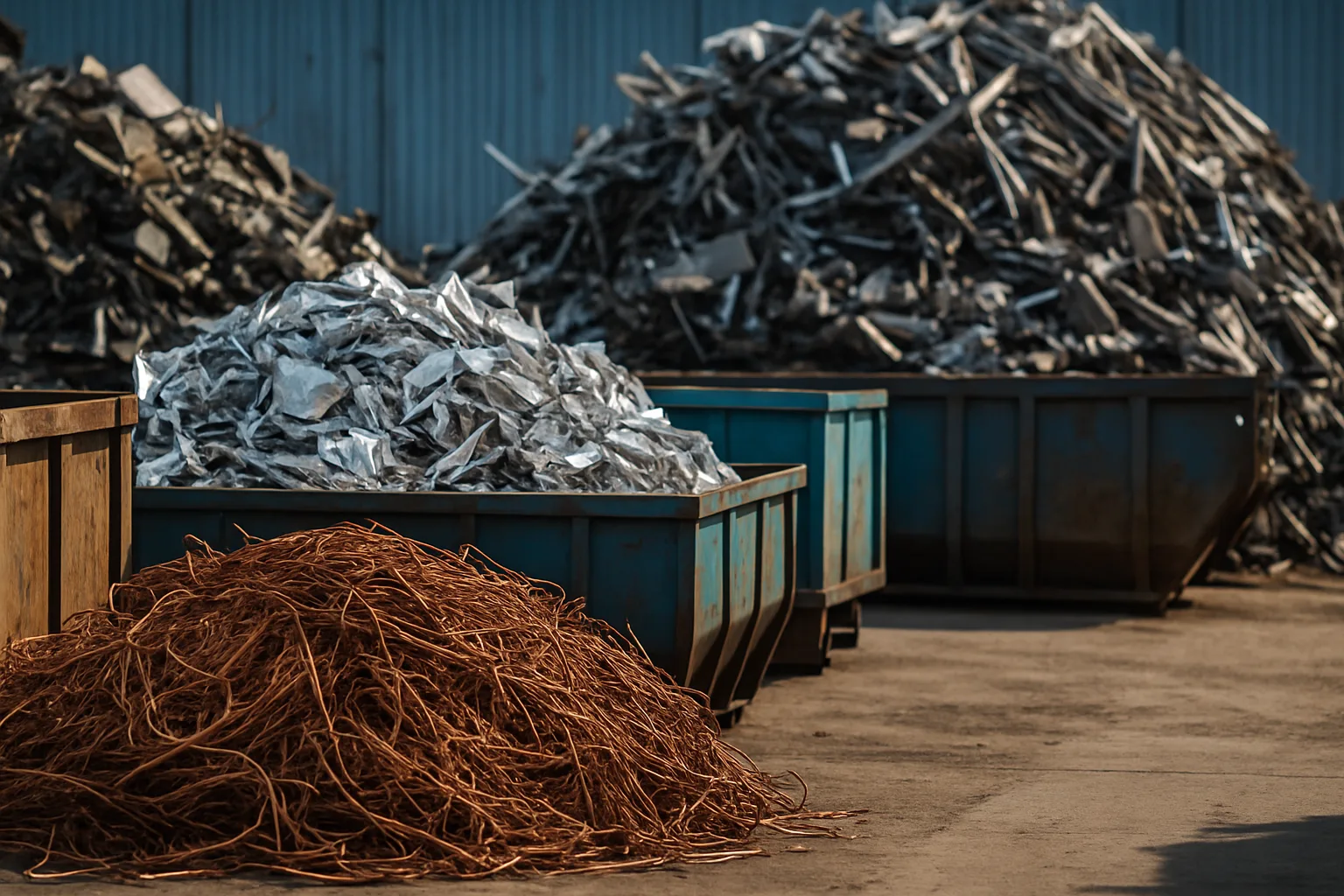
Why Some Scrap Pays 10x More Than Others — And How Hamilton Collectors Are Cashing In
Not all scrap is created equal. You could spend a full day hauling steel and walk away with gas money. Or you could spend an hour sorting copper and non-ferrous materials and pocket something worth talking about. If you're trying to sell scrap metal in Hamilton, knowing which metals pay and which ones barely move the needle is the difference between a side hustle and a real revenue stream.
This isn't a generic rundown. It's a practical breakdown of the most profitable metals you can collect in Canada right now — what they weigh, what they're worth, and how to move them for the best possible price.
Copper: Still the King of Scrap Metal Prices Today
Ask any yard operator and they'll tell you the same thing — copper is the metal that changes conversations. Scrap copper consistently commands the highest per-pound prices in the non-ferrous category. Whether it's bare bright wire, #1 copper pipe, or #2 copper with solder, every grade has real value. The spread between grades matters, so learning to separate your copper before you show up at a yard is one of the fastest ways to improve your return.
In Hamilton and across Ontario, copper shows up in demolition sites, HVAC systems, old appliances, electrical panels, and renovated homes. If you're doing any kind of trades work or property cleanup, copper is the metal you never leave behind. Even insulated wire — stripped or unstripped — has market value, though stripping it yourself typically yields a better per-pound rate than selling it sheathed.
- Bare bright copper: Highest grade, clean uncoated wire
- #1 copper: Clean pipe and solid copper, no fittings or solder
- #2 copper: Pipe with solder, mixed copper with some oxidation
- Insulated wire: Value depends on copper content percentage
Platforms like get competitive bids for your scrap in Canada exist precisely because copper loads attract multiple serious buyers. When you put a documented copper load in front of vetted buyers, competition does the pricing work for you.
Catalytic Converters: The High-Value Collect That Requires Documentation
Catalytic converters are one of the most valuable items in the scrap ecosystem — and one of the most regulated. Each cat contains platinum group metals (PGMs): platinum, palladium, and rhodium. Prices for these metals shift constantly, which means the value of a single converter can vary significantly depending on when and how you sell it.
If you're collecting cats in Hamilton or anywhere in Ontario, documentation is non-negotiable. Serial tracking, VIN lookup, and photo documentation aren't optional extras — they're how legitimate buyers protect themselves and how sellers prove clean title. SMASH builds these tools directly into the selling process, which means your load comes with the paper trail buyers need to bid confidently.
The key insight here: selling catalytic converters through a competitive auction format rather than a single cold call to one buyer is where real price discovery happens. A single buyer quotes you what benefits them. Multiple vetted buyers competing on the same load — with full documentation — is a completely different conversation.
- Always photograph cats before transport
- Record serial numbers or use a VIN lookup tool where applicable
- Know your converter types — OEM cats typically carry more PGM content than aftermarket
- Sell in volume where possible — larger lots attract more serious buyers
Aluminum Scrap Value Today: More Profitable Than Most People Realize
Aluminum doesn't get the same headline attention as copper, but aluminum scrap value today makes it one of the most consistently profitable metals to collect — especially at volume. It's everywhere: window frames, siding, rims, engine blocks, extrusions, cans, and industrial offcuts. And unlike copper, it's often overlooked by casual collectors, which creates real opportunity for anyone paying attention.
The aluminum scrap value per pound varies by grade and form. Cast aluminum (engine blocks, transmission housings) trades differently than extrusions or sheet aluminum. Clean aluminum free of paint, steel, or plastic inserts commands a better rate. If you're collecting rims, know whether they're aluminum or steel before hauling — aluminum rims are worth significantly more per pound than steel.
For anyone trying to understand aluminum scrap price today in the Hamilton area, the honest answer is: it moves with the market. Global aluminum prices, energy costs, and demand from manufacturers all factor in. That's exactly why checking scrap metal prices today on GetMyScrap before you sell gives you a realistic baseline instead of guessing.
- Cast aluminum: Engine blocks, transmission cases, cookware
- Aluminum extrusions: Window frames, door frames, structural profiles
- Aluminum sheet: Siding, roofing panels, automotive body panels
- Aluminum rims: High-demand, easy to identify and transport
- MLC (mixed low-copper aluminum): Wire, motor rotors — value depends on copper content
If you're just getting started with aluminum collection in Ontario, focus on separation. Mixed loads pay less. Clean, sorted aluminum consistently outperforms a bin of random mixed material. That extra ten minutes of sorting before you sell translates directly to a better per-pound rate.
Steel and Ferrous Metals: Volume Is the Play
Steel and iron pay far less per pound than copper or aluminum, but they're available in far greater quantities. If you have access to bulk ferrous material — structural steel, rebar, farm equipment, old appliances — volume becomes the strategy. A few thousand pounds of prepared steel can still represent a meaningful payout, especially when you're not paying for a middleman's margin.
In Hamilton, Ontario's industrial heritage means ferrous scrap is never in short supply. Manufacturing offcuts, old machinery, shop equipment, and demolition debris flow into the market regularly. The play here isn't price per pound — it's minimizing haul cost, maximizing load weight, and getting the load in front of buyers who actually want it.
Auto body steel, appliances (white goods), and structural steel each have their own pricing tiers. Knowing the difference — and presenting your load accurately — saves time and avoids renegotiation at the scale. Documentation matters even for ferrous loads, especially when BOLs and packing lists help buyers confirm what they're bidding on before the truck rolls.
How to Actually Get the Best Price When You Sell Scrap Metal in Hamilton
Knowing which metals pay is step one. Getting paid well for them is a different skill entirely. The old model — call one buyer, take their number, move on — leaves money on the table every time. It's not that buyers are dishonest. It's that a single quote with no competition is never the market price. It's just one person's offer.
The better approach is to sell your scrap metal in Canada on GetMyScrap, where your load gets in front of multiple buyers who are actually competing for it. That competition is where real pricing happens. Documented inventory, vetted buyers, and an auction format replace the guesswork with actual market data.
SMASH specifically helps sellers with the documentation side — inventory tools, photo capture, serial and VIN tracking for cats, auto-invoicing, and GST/HST handling built right in. No subscription fees. The platform wins when you win. That alignment matters, especially for sellers who are moving meaningful volume and want to know their price reflects the actual market.
For Hamilton-area collectors and recyclers, Hamilton scrap metal services are designed to connect you with buyers who know the market and bid seriously. Whether you're sorting copper from a reno job or moving a load of cats, the process is straightforward and the documentation keeps everything clean.
Before you load the truck, take a few minutes to explore Canadian scrap metal guides for current pricing context and tips on presenting your load for maximum buyer confidence. A well-documented, clearly described load consistently performs better at auction than a vague listing. That's not a guess — it's how buyer competition works.
Scrap metal prices fluctuate with commodity markets, currency, and industrial demand. Always verify current rates before selling — prices in this article are for general reference only and do not represent guaranteed market values.
Ready to stop guessing what your load is worth? Get a fair price for your scrap metal in Canada — request a pickup at getmyscrap.ca and find out what competitive buyers will actually pay.
Frequently Asked Questions
Q: What is the most profitable scrap metal to collect in Hamilton?
Copper consistently earns the highest per-pound return, followed by catalytic converters (for PGM content) and aluminum. The exact ranking shifts with market prices, but non-ferrous metals almost always outperform ferrous (steel and iron) on a per-pound basis. If you're in Hamilton with access to renovation or industrial material, copper and aluminum are the priority picks.
Q: How do I find out the aluminum scrap price today in Ontario?
Aluminum prices change with global commodity markets and local yard demand. The best approach is to check current rates through a platform like GetMyScrap or SMASH before you sell, rather than relying on a number you heard last week. Prices can shift meaningfully over days, especially during periods of industrial volatility.
Q: Do I need documentation to sell scrap metal in Hamilton?
For catalytic converters, documentation is legally required in Ontario — serial numbers, photos, and proof of ownership are standard. For other non-ferrous metals, solid documentation (inventory lists, photos, BOLs for larger loads) helps buyers bid with confidence and often improves the price you receive. SMASH builds these tools into the selling process so you're not managing paperwork manually.
Q: Is it worth stripping copper wire before selling?
Usually yes — bare copper wire pays significantly more per pound than insulated wire because the buyer isn't paying for material they need to process. That said, the economics depend on volume and your time. For small quantities, the effort may not justify the premium. For larger loads of insulated wire, stripping before sale almost always improves your return.
Q: How does selling through an auction platform like SMASH differ from calling a local yard?
A single yard gives you one offer — their offer. An auction platform puts your load in front of multiple vetted buyers who compete for it, which is how real price discovery works. SMASH also handles documentation, invoicing, and GST/HST compliance, so the process is cleaner and more transparent than a handshake deal over the phone.
Stay current on scrap metal market trends and industry insights — follow SMASH on LinkedIn for regular updates from across the North American scrap market.