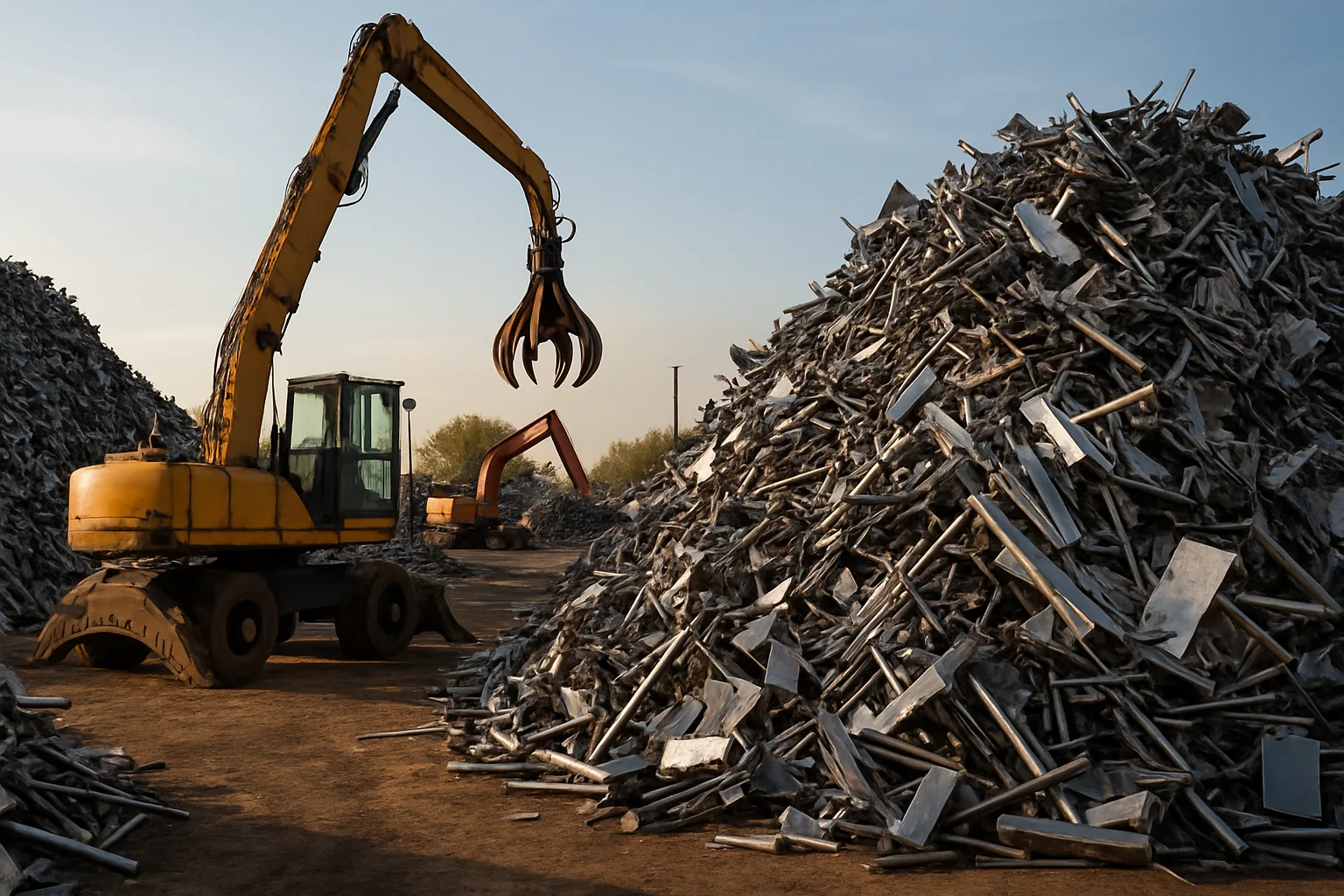
Not All Stainless Is the Same — and Yards Will Pay You Accordingly
Bring a mixed load of stainless steel to a yard without knowing what you have, and you'll likely get paid on the lowest grade in the pile. That's not a scam — that's how sorting risk works. Yards aren't going to pay you 304 prices for 430 they haven't confirmed. If you want better scrap metal prices in Mississauga for your stainless loads, you need to know your grades before you show up.
This guide breaks down the most common stainless steel scrap grades, what buyers actually look for, and how platforms like the SMASH Recycling auction platform create competitive price discovery on loads that most yards would otherwise quote at their own convenience.
Why Stainless Steel Grades Matter More Than You Think
Stainless steel isn't a single metal — it's a family of alloys. The grade tells a buyer exactly how much nickel, chromium, and molybdenum is in the alloy. Those elements are the expensive part. Nickel alone can swing the value of a tonne of stainless dramatically depending on market conditions. A grade with 8–10% nickel content is worth meaningfully more than one with zero nickel.
This is why a yard will test your stainless with an XRF analyzer (a handheld gun that reads the alloy composition on the spot) before quoting. They're not being difficult — they're doing exactly what any informed buyer should do. The problem is that if only one buyer tests it, you get their price. Competition is what turns that data point into a fair market offer.
Here's a quick breakdown of how grades typically rank by scrap value, from highest to lowest:
- 316 / 316L stainless — Highest value. Contains molybdenum (2–3%) in addition to nickel and chromium. Used in marine, pharmaceutical, and chemical processing equipment. Buyers pay a premium for clean, sorted 316.
- 304 / 304L stainless — The workhorse grade. Most common in food processing, kitchen equipment, tanks, and tubing. Solid nickel content (8–10%). This is what most yards quote when they say "stainless."
- 309 / 310 stainless — High-temperature alloys. Less common in everyday scrap, but worth identifying if you have furnace parts, heat exchangers, or industrial kilns.
- 430 stainless — Ferritic grade, zero nickel. Think appliance trim, automotive trim, and decorative panels. Significantly lower value than 304. Don't mix it into a 304 load.
- 201 stainless — Manganese replaces some nickel. Common in budget cookware and some Asian-manufactured equipment. Lower value than 304, often confused for it visually.
- 17-4 PH / specialty grades — Precipitation-hardened stainless used in aerospace and high-stress applications. Rare in general scrap, but worth flagging separately when you find it.
How to Identify Your Grade Before You Call a Buyer
Visual ID alone won't cut it — most stainless looks the same to the eye. But there are a few practical steps you can take before handing over a load.
The magnet test is a starting point, not a finish line. Ferritic grades like 430 are strongly magnetic. Austenitic grades like 304 and 316 are weakly magnetic or non-magnetic. This tells you something — but it doesn't tell you which austenitic grade you have. For that, you need an XRF gun or a trusted yard that will test and show you the reading.
If you're sorting a large volume — say, a decommissioned commercial kitchen or a food processing plant cleanout — it pays to:
- Check for stampings or welds that identify the grade (often stamped on tubing or tanks).
- Separate anything magnetic into its own pile before going to the yard.
- Ask the yard to show you the XRF reading. A reputable buyer will.
- Get multiple quotes before you commit, especially on loads over 500 lbs.
If you're in Mississauga or anywhere across Ontario and regularly generating stainless scrap, sorting by grade before the call will always work in your favour. Even separating magnetic from non-magnetic can move your price per pound noticeably.
Stainless Steel vs. Other Non-Ferrous Scrap: Knowing Your Full Load's Value
Stainless rarely comes alone. Industrial and commercial cleanouts typically include copper, aluminum, and carbon steel mixed in with the stainless. Each metal prices differently — and knowing the rough breakdown helps you negotiate instead of guess.
As a general frame of reference for mid-2026 market conditions:
- 304 stainless steel typically prices below bare bright copper but above most aluminum grades by a meaningful margin.
- Copper scrap — particularly bare bright and #1 copper — remains one of the highest-value non-ferrous metals in the yard. Checking the copper scrap price today before you sell is worth doing on any load with significant copper content.
- Aluminum scrap value per pound varies heavily by grade — extrusion, cast, and painted aluminum all price differently, much like stainless. Clean extrusion aluminum fetches more than painted or contaminated sheet.
- Carbon steel and iron price by the ton, not the pound, and represent the lowest tier per unit weight.
If you're generating mixed non-ferrous loads in Mississauga — from a plant shutdown, renovation, or ongoing industrial operation — knowing how to separate your material by category before you sell is one of the most effective ways to improve what you walk away with. Platforms like SMASH exist precisely to take that sorted, documented material and put it in front of multiple vetted buyers at once, instead of letting a single phone call set the ceiling on what you'll earn.
For a deeper look at how to navigate pricing across different metals, explore Canadian scrap metal guides that break down grades, weights, and what to expect at the yard.
How Auction-Based Selling Changes the Math on Stainless Loads
Here's the problem with the traditional approach to selling stainless: you call one yard, they quote you a price, and you either take it or make another call. Most people take it. The yard knows that.
A scrap metal auction platform works differently. Your load goes in front of multiple vetted buyers simultaneously. They compete. The market sets the price — not one buyer's margin targets for the week. This is especially true for larger, well-documented stainless loads where the composition is verified and the weight is accurate.
The SMASH Recycling auction platform brings this model to the Canadian market. Photo documentation, serial tracking, and accurate material descriptions give buyers the confidence to bid competitively. More confidence from buyers typically means better price discovery for sellers. That's not a guarantee — markets move, and not every load will attract the same interest — but the structure creates conditions for real competition rather than a single take-it-or-leave-it call.
No subscription fees. SMASH only wins when you win. That alignment matters if you're a yard or industrial seller who moves volume regularly and is tired of leaving money on the table through single-buyer pricing.
What Buyers in Ontario Want to See on a Stainless Load
If you want to attract serious bids — whether you're selling through a yard in Mississauga, Ontario or listing through an auction platform — here's what makes a stainless load easy to price and easy to buy:
- Grade separation. Don't mix 304 and 430 in the same bin. Separate magnetic from non-magnetic at a minimum.
- Clean material. Rubber gaskets, plastic fittings, and painted steel bolted to stainless are contaminants. Strip them if you can. Buyers will dock you if they have to do it themselves.
- Accurate weight. Know your tonnage. A verified scale ticket builds trust.
- Photos and documentation. Especially for larger loads — show what it is, how it's sorted, and where it came from if you can. A food processing plant cleanout described clearly is far easier to bid on than "some stainless, not sure what grade."
- XRF confirmation if possible. If you have a testing result, include it. It removes the buyer's guesswork and their need to price in uncertainty.
Do these things consistently and you stop being the seller who takes whatever is offered. You become the seller buyers want to compete for. That's the shift that changes what scrap metal prices in Mississauga actually mean for your bottom line.
Whether you're running a recycling operation in Ontario or clearing out a single industrial site, sell your scrap metal in Canada on GetMyScrap and get connected with buyers who want what you have.
Frequently Asked Questions
Q: What is the difference between 304 and 316 stainless scrap, and does it affect price?
Yes — significantly. 316 stainless contains molybdenum in addition to the nickel and chromium found in 304. Molybdenum adds corrosion resistance and value. Yards will pay more per pound for confirmed 316 than for 304, and more for 304 than for ferritic grades like 430. Keeping these grades separate before you sell protects your return.
Q: What are current scrap metal prices in Mississauga for stainless steel?
Stainless prices fluctuate with nickel markets, and every yard sets its own buy rate. The best way to know what your load is worth right now is to get multiple quotes — or list through a competitive platform that puts your material in front of more than one buyer. Always check current rates before committing to a sale, as prices change week to week.
Q: How does the copper scrap price today compare to stainless steel?
Clean copper — particularly bare bright or #1 copper — typically prices higher per pound than most stainless grades. However, this gap varies with commodity markets. If your load includes both copper and stainless, separate them carefully. Mixing copper into a stainless load often gets both downgraded.
Q: Is aluminum scrap value per pound affected by how clean the material is?
Absolutely. Clean aluminum extrusion prices better than painted, coated, or contaminated aluminum. Cast aluminum prices differently again. The pattern is consistent across scrap metals: sorted and clean material gives buyers the confidence to pay more, because they know exactly what they're getting.
Q: Can I sell stainless steel scrap through an auction platform in Ontario?
Yes. Platforms like SMASH allow sellers across Ontario — including Mississauga — to list documented loads and receive competitive bids from vetted buyers. This model is particularly effective for larger stainless loads where grade confirmation and accurate documentation make competitive bidding straightforward. No subscription fees are required to get started. Reach out to jeff@smashscrap.com to get started as a seller.
If you've got stainless steel, copper, aluminum, or mixed non-ferrous material sitting in your yard, don't settle for a single phone call quote. Get a fair price for your scrap today — request a pickup at getmyscrap.ca and see what competitive price discovery actually looks like.
Stay current on scrap metal market movements and industry insights by following SMASH on LinkedIn — it's where the industry conversation is happening.