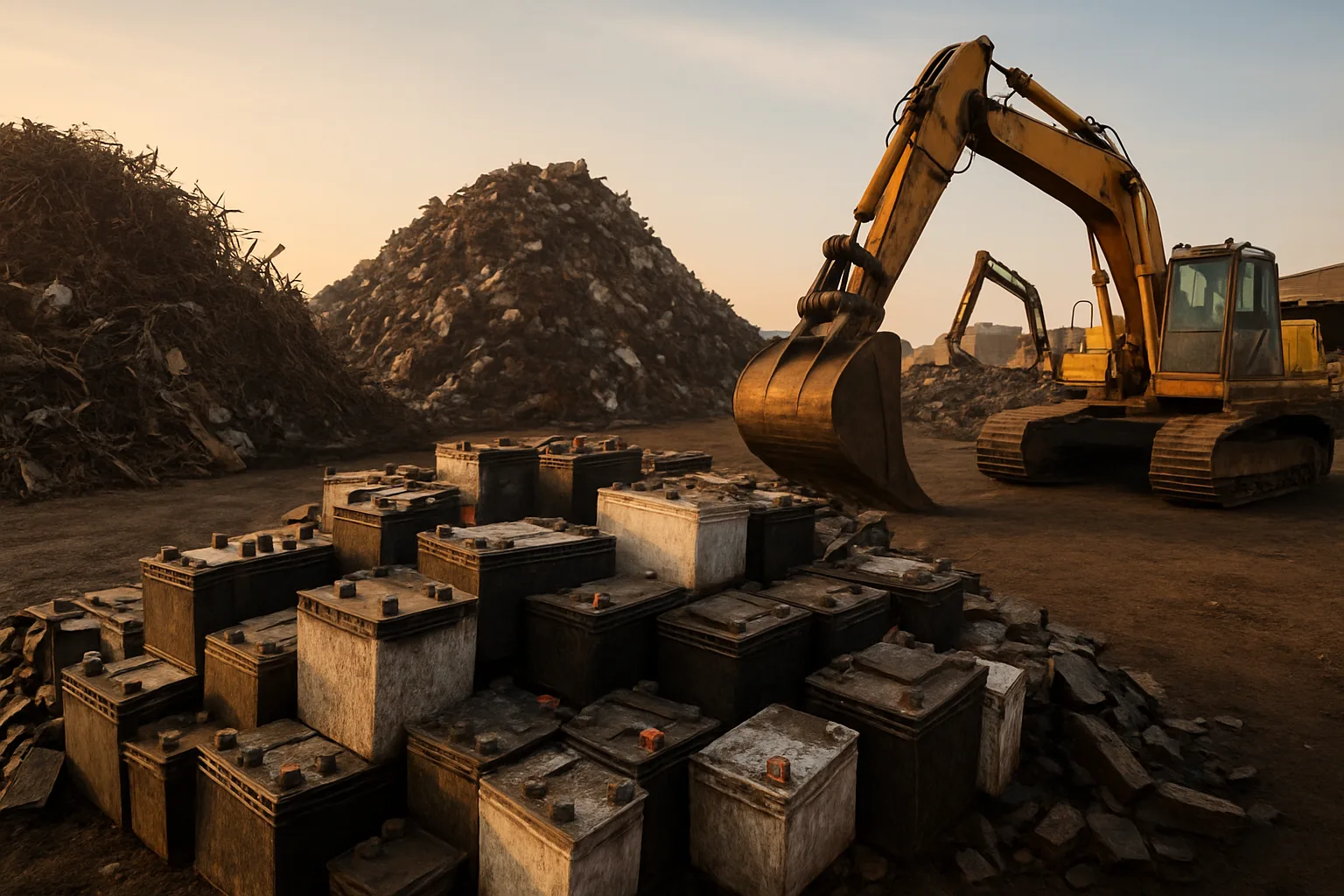
How a Saint John Scrap Yard Unlocked Real Value from Lead-Acid Battery Recycling
Most yards treat lead-acid batteries like an afterthought. They stack up in the corner, take up space, and get sold to whoever shows up first — usually for less than market. But lead is one of the most consistently recyclable metals on the planet, and a well-documented load of spent batteries moving through a B2B scrap metal marketplace tells a completely different story.
This case study walks through what changes when a yard stops guessing and starts competing. The numbers matter less than the process — and the process is everything.
The Problem: One Buyer, No Leverage, No Transparency
A scrap operation in Saint John, New Brunswick was moving a steady volume of lead-acid batteries — automotive, marine, and industrial UPS units. Good material. Consistent supply. The yard had a single buyer they'd worked with for years, a regional secondary smelter that made monthly pickups.
The relationship worked fine. Until it didn't.
When lead spot prices shifted in early 2026, the buyer's offered price didn't move with it. The yard operator had no visibility into what other buyers were paying. No benchmark. No leverage. Just a handshake deal that quietly eroded value every quarter. That's the trap that single-buyer arrangements almost always become — comfortable until they cost you.
The operator had sold scrap copper and aluminum through spot deals for years. Batteries were treated the same way, even though lead scrap has its own pricing dynamics and a much deeper buyer pool than most yard operators realize. The fix wasn't complicated. It was about exposure and documentation.
What Lead-Acid Battery Scrap Is Actually Worth — and Why It Varies
Lead-acid batteries are one of the most recycled products in North America. The recovery rate for automotive lead-acid batteries consistently runs above 95%. That demand doesn't disappear — secondary smelters, battery remanufacturers, and lead refiners are always buying. The question is whether your yard is reaching all of them.
Pricing for lead-acid batteries at the yard level is typically quoted per pound on whole batteries or per pound on broken/drained battery scrap (also called hard lead or soft lead depending on the alloy). The spread between those two grades matters. So does:
- Battery type — automotive, deep-cycle, industrial, and AGM batteries all have different lead content percentages
- Condition — intact sealed units versus cracked or drained cases
- Volume — small mixed lots price differently than clean sorted loads of 20,000 lbs or more
- Documentation — a load with a packing list, photo documentation, and a clear manifest moves faster and prices better
- Freight logistics — some buyers factor in pickup; others require FOB pricing
Disclaimer: Lead scrap prices fluctuate with LME lead spot prices and regional demand. Always check current rates before quoting or committing to a sale.
The Saint John yard was selling whole intact batteries. Clean, consistent grade. The problem wasn't the material — it was the audience. One buyer sees one price. Ten vetted buyers see a market.
How a B2B Scrap Metal Marketplace Changed the Outcome
The yard operator listed the load through a B2B scrap metal marketplace instead of calling their usual contact. The shift wasn't dramatic on the surface. But structurally, it was completely different.
Through SMASH, the load was documented with photos, weight estimates, battery type breakdowns, and a packing list. That documentation did something the phone call never could — it gave multiple buyers enough information to bid with confidence. Vague loads get vague offers. Documented loads get real ones.
The auction format meant buyers competed. Not just one regional smelter, but secondary processors from across North America who could arrange pickup or had freight networks already running through New Brunswick. Competition doesn't guarantee a higher price. But it does reveal what the market actually is — and that number is almost always more accurate than what a single buyer volunteers.
You can find the best price for your scrap in Canada when your load reaches buyers who are actively looking for that exact material. That's the difference between a market price and a relationship price — and they're rarely the same number.
The Documentation Process: Why It Matters for Lead Scrap
Lead-acid battery recycling has regulatory weight behind it. Batteries are classified as hazardous waste in most jurisdictions, which means buyers carry liability when they move material. A load with solid documentation — photos, weights, battery counts by type, a manifest — reduces that liability. Buyers pay more when their risk is lower.
Here's what a well-documented lead-acid battery load includes before it goes to market:
- Photo documentation — multiple angles showing condition, stacking, and any visible damage or leakage
- Battery count and type breakdown — automotive vs. marine vs. industrial, AGM separated if present
- Estimated weight — by pallet or by lot, not just a rough total
- Condition notes — intact, cracked, drained, or mixed
- Storage and handling info — palletized, contained, ready for pickup or requires loading assistance
- Freight terms — FOB yard, or is pickup negotiable?
The SMASH platform's inventory tool handles this systematically. The yard operator enters the details once. Every buyer in the auction sees the same information. No misquotes. No surprises at pickup. That consistency builds buyer trust — and buyer trust shows up in bid behavior.
If you want to sell your scrap metal in Canada on GetMyScrap, getting your documentation right before listing is one of the simplest ways to improve your outcome. The material is the same either way. The presentation changes what buyers are willing to pay.
Saint John Yards and the Broader New Brunswick Opportunity
Saint John sits in a strong position for scrap metal recycling logistics. The port infrastructure, highway access, and industrial base — shipbuilding, refining, manufacturing — generate a consistent stream of scrap that most regional markets don't have. Automotive battery volume alone from the greater Saint John area runs substantial numbers through regional yards year-round.
But geography can also create a false ceiling. If your buyer pool is limited to who can physically drive to you in New Brunswick, you're not seeing the full market. A buyer in Ontario or Quebec — or across the border — who has freight moving through the region anyway can often offer rates that beat local players. They just need to know the load exists and trust the documentation.
That's exactly the gap a B2B scrap metal marketplace fills. It's not about replacing relationships. It's about knowing what your material is worth before you accept any offer. Saint John scrap metal services connect local yards with buyers across the continent — not just whoever's in the rolodex.
Yards across New Brunswick that are moving non-ferrous material — copper, aluminum, lead — are sitting on better price discovery than they're currently accessing. The infrastructure to reach those buyers exists. Most yards just haven't plugged into it yet.
What This Means for Your Yard's Battery Strategy
Lead-acid battery recycling isn't glamorous. It's heavy, it's regulated, and it builds up fast if you're pulling batteries from vehicles or running an auto recycling operation. But it's consistent volume with real secondary market demand — and consistent volume is exactly what competitive auctions are built for.
If your yard is currently doing any of the following, you're leaving money on the table:
- Selling batteries to one buyer without benchmarking the offer
- Lumping batteries into a mixed non-ferrous load instead of listing them separately
- Skipping documentation because it feels like extra work
- Accepting pickup-only buyers when freight-in buyers exist in your region
- Pricing off memory or habit instead of current LME-linked market rates
SMASH was built for exactly this situation — a yard with good material and no real visibility into what it's worth on an open market. The platform handles the documentation structure, the buyer vetting, and the auction mechanics. You handle the scrap. Auto-invoicing covers the paperwork after the sale closes.
More buyers means better price discovery. That's not a pitch — it's just how markets work. If you want to get a fair price for your scrap today, the first step is making sure more than one buyer can see what you have.
Whether you're sitting on a pallet of automotive batteries or a full truckload of industrial UPS units, the process is the same: document it, list it, let the market respond. And when you're ready to go deeper on scrap strategy, explore Canadian scrap metal guides built for yards and sellers at every level.
If you're in Saint John or anywhere across New Brunswick with lead scrap, batteries, or non-ferrous material moving through your yard — don't guess at your price. Get a fair price for your scrap metal in Canada by requesting a pickup at getmyscrap.ca. The market is out there. You just need to reach it.
Frequently Asked Questions
Q: What is the scrap value of lead-acid batteries in Canada?
Lead-acid battery scrap prices are tied to LME lead spot prices and shift regularly with market conditions. Pricing is typically quoted per pound on whole batteries, with separate rates for broken battery scrap, hard lead, and soft lead. Always check current rates before committing to a sale — prices in 2026 can move significantly week to week depending on global demand and North American smelter capacity.
Q: How does a B2B scrap metal marketplace help yards sell lead scrap?
A B2B scrap metal marketplace like SMASH connects yards directly with vetted buyers across North America — not just local contacts. Instead of a single buyer setting your price, multiple qualified buyers compete through an auction format. Better documentation, wider reach, and competitive bidding all work together to improve price discovery for your material.
Q: Can I sell scrap metal in Saint John through an online platform?
Yes. Platforms like SMASH allow yards in Saint John and across New Brunswick to list loads online, reach buyers beyond the region, and move material more efficiently. You document the load, buyers bid, and the platform handles invoicing after the auction closes. Freight logistics are negotiated as part of the sale — many buyers have networks already operating through Atlantic Canada.
Q: What documentation do I need to sell a load of lead-acid batteries through a scrap auction?
A solid listing includes photo documentation, battery count by type, estimated weight, condition notes (intact, cracked, drained), storage and handling information, and your freight terms. The more detail you provide, the more confidence buyers have — and buyer confidence directly affects bid behavior. SMASH's inventory tool walks you through this systematically so nothing gets missed.
Q: Are lead-acid batteries regulated as hazardous waste in New Brunswick?
Yes. Lead-acid batteries are classified as hazardous waste under provincial and federal regulations in Canada, including in New Brunswick. This affects how they must be stored, transported, and transferred between parties. Working with a platform that connects you to vetted buyers helps ensure you're dealing with processors who understand and comply with those requirements. Always confirm regulatory handling with your buyer before finalizing a sale.
Stay sharp on scrap metal market trends and platform updates — follow SMASH on LinkedIn for industry insights and news from the Canadian scrap market.