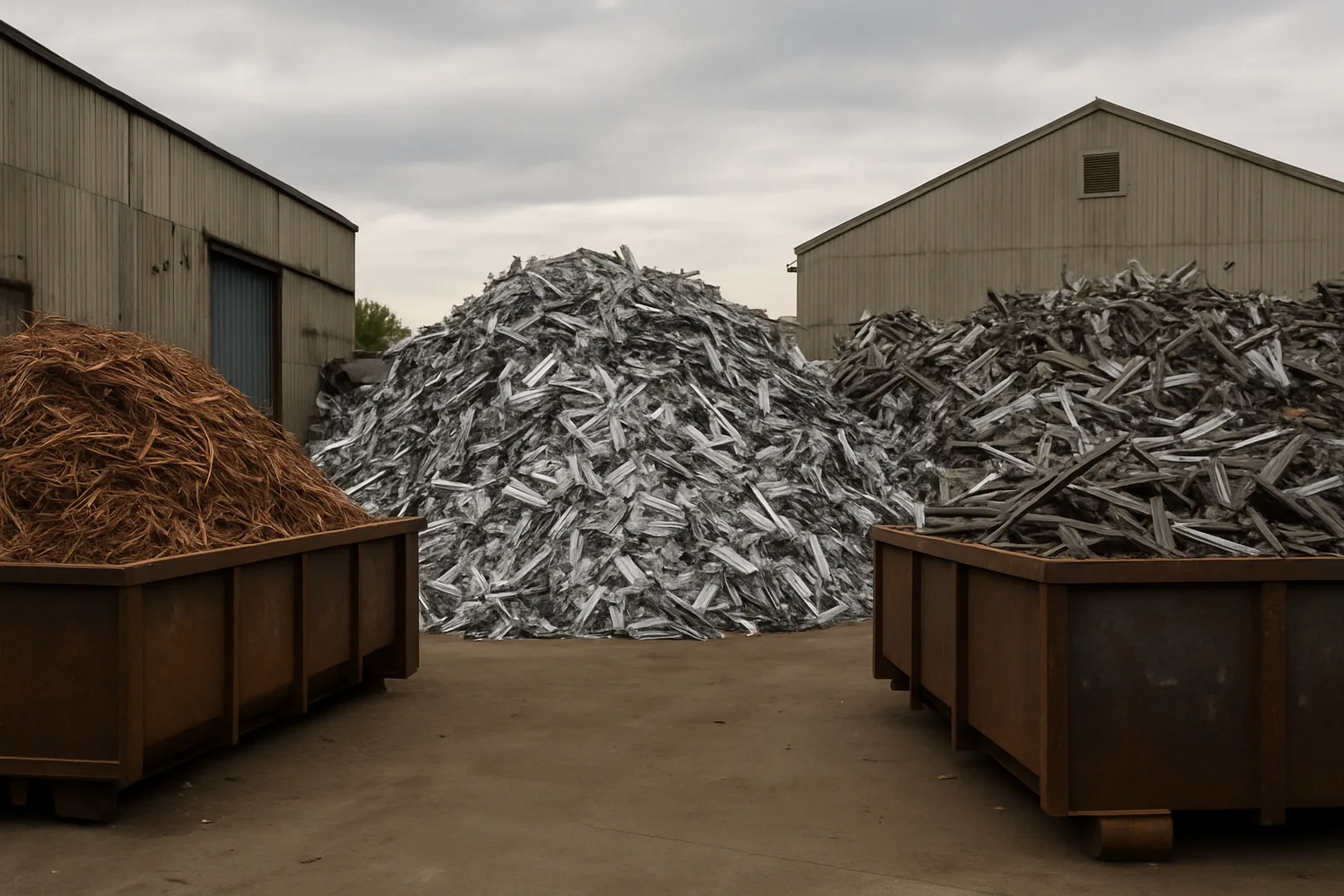
Why Environmental Regulations Are Reshaping Scrap Metal Recycling in Canada — And What It Means for Your Price
Most people selling scrap metal are thinking about one thing: what's the aluminum scrap price today? That's fair. But in 2026, the rules around how scrap gets collected, processed, and sold are tightening — and those rules have a direct effect on what you get paid and who you're allowed to sell to. If you're sitting on a pile of aluminum, copper, or catalytic converters in Yorkton or anywhere across Saskatchewan, understanding the regulatory landscape isn't just useful. It's money in your pocket.
Environmental compliance isn't a bureaucratic afterthought anymore. It's woven into every stage of the scrap metal supply chain. Yards that don't meet provincial and federal standards face fines, license suspensions, or outright shutdowns. That affects the number of active buyers in your area — and fewer buyers means less competition for your load.
The Environmental Case for Scrap Metal Recycling in Canada
Scrap metal recycling is one of the most energy-efficient industrial processes on the planet. Producing aluminum from recycled scrap uses roughly 95% less energy than smelting it from raw bauxite ore. For steel, recycled production cuts energy use by around 60-70% compared to virgin production. These aren't abstract environmental wins — they translate into real carbon reductions that Canadian industry depends on to hit federal emissions targets under the Canadian Net-Zero Emissions Accountability Act.
That's part of why federal and provincial regulators in Canada continue to invest in strengthening the recycling ecosystem rather than restricting it. The goal is cleaner processing, better documentation, and tighter control over hazardous materials — not shutting down the scrap trade. For sellers, this is good news. A well-regulated industry attracts more serious, better-capitalized buyers, which supports price competition.
- Aluminum recycling reduces greenhouse gas emissions significantly versus primary production
- Copper recycling avoids the heavy environmental footprint of open-pit mining
- Catalytic converter recycling recovers platinum group metals (PGMs) that would otherwise require destructive extraction
- Steel and ferrous recycling diverts millions of tonnes from landfills across Canada annually
In Saskatchewan, where the agricultural and energy sectors generate significant volumes of ferrous and non-ferrous scrap, recycling isn't a niche activity. It's an essential part of how the provincial economy handles end-of-life equipment, vehicles, and industrial materials. Yards in and around Yorkton serve real working communities — and they operate under real regulatory expectations.
What Canadian Environmental Regulations Actually Require From Scrap Yards
Scrap yards in Canada operate under a layered set of federal, provincial, and municipal requirements. At the federal level, Environment and Climate Change Canada oversees regulations related to hazardous waste, including rules around how fluids (coolant, oil, brake fluid) must be drained and handled before a vehicle or piece of equipment is processed. The Canadian Environmental Protection Act (CEPA) governs toxic substances and applies directly to how certain metals and metal-containing compounds can be stored, transported, and sold.
Provincially, Saskatchewan's Environmental Management and Protection Act sets standards for yard operations including stormwater management, soil contamination prevention, and waste disposal. Yards that handle end-of-life vehicles are also subject to vehicle depollution requirements — meaning catalytic converters, batteries, mercury switches, and refrigerants all need proper handling before the shell goes through the shredder.
For sellers, the key practical implications are:
- Yards may require proof of ownership for certain materials (vehicles, catalytic converters)
- High-value non-ferrous loads — especially scrap copper and catalytic converters — may require government-issued ID and documented bill of sale
- Some materials (leaded components, certain alloys) require special handling declarations
- Accurate weight tickets and BOLs are increasingly required for commercial loads
None of this is designed to make your life harder. It's designed to keep bad actors out of the supply chain — which protects legitimate sellers and supports stable pricing across the market.
How Documentation and Transparency Drive Better Scrap Metal Prices
Here's something the industry doesn't say loudly enough: documented loads sell for more. When a buyer can see clear photos, accurate weights, material breakdowns, and proper chain-of-custody records, their risk goes down. Lower risk means they can bid more aggressively. That's not theory — that's how competitive markets work.
The old way of selling scrap in Yorkton or anywhere else in Saskatchewan looked like this: one phone call to one buyer, a rough estimate, and a handshake price. No competition. No documentation. No leverage. The buyer held all the information, and the seller just had to trust the number they were given.
Platforms like get competitive bids for your scrap in Canada through SMASH change that entirely. When you document your load properly — photos, weights, condition notes, serial tracking where applicable — you're not just satisfying regulatory requirements. You're giving multiple vetted buyers the confidence to bid at market. That's how price discovery actually works. Sell your scrap metal in Canada on GetMyScrap and you're already in a system built around transparency, not guesswork.
Think about it from the buyer's side. Two loads of scrap aluminum come through. One has clear photos, documented weights, and a packing list. The other is a description over the phone. Which one gets the higher bid? Every time, it's the documented load. Transparency isn't just good compliance practice — it's a pricing strategy.
Catalytic Converters: The Most Regulated Material in Scrap Right Now
No material in the scrap industry has attracted more regulatory attention in recent years than catalytic converters. Because cats contain platinum, palladium, and rhodium — metals worth hundreds of dollars per unit — they've become a target for theft. In response, provinces across Canada have tightened documentation requirements significantly.
In Saskatchewan and across most of Canada, selling catalytic converters now typically requires:
- Government-issued photo ID
- Proof of vehicle ownership (title or registration) tied to the serial number
- Transaction records retained by the yard for a minimum period
- In some cases, a waiting period before payment is released
These requirements exist to disrupt theft-to-sale pipelines. For legitimate sellers — automotive shops, dealerships, salvage yards, and individual vehicle owners — the process adds a step but doesn't add much friction if your paperwork is in order. If you're running Yorkton scrap metal services or sourcing cats through a legitimate repair or salvage operation, you should have no problem meeting these standards.
What matters is working with buyers who understand these requirements and operate within them. SMASH connects sellers to vetted buyers who know the regulatory landscape — no guessing about who you're dealing with or whether they're operating legally.
Selling Scrap Metal Online: What the Environmental Rules Mean for Digital Platforms
The growth of sell scrap metal online platforms has created a new compliance dimension. When a transaction happens digitally — a seller in Saskatchewan listing a load for buyers across North America — who's responsible for ensuring environmental compliance? The answer is: everyone in the chain, and documentation is what proves your part.
Reputable online scrap platforms build compliance into the transaction itself. That means requiring photo documentation, accurate material descriptions, and verifiable seller identity before a load goes to auction. It means auto-generated invoicing that captures the transaction details required by provincial record-keeping rules. It means buyers who are vetted not just for creditworthiness but for their ability to receive and process material legally.
This is exactly how SMASH is structured. The platform isn't just a marketplace — it's a documented, transparent transaction environment. For sellers asking about the aluminum scrap price today or trying to find the best scrap metal prices Saskatchewan has to offer, that structure matters. You're not just getting a price. You're getting a defensible, documented sale.
Whether you're in Yorkton moving a load of non-ferrous material, or managing a larger commercial operation anywhere in Canada, the shift toward documented digital sales isn't just convenient — it's increasingly what regulators expect. Explore Canadian scrap metal guides to understand how to set up your loads for compliant, competitive sales from the start.
What This All Means for Your Price in 2026
Environmental regulation isn't the enemy of good scrap prices. Done right, it's the foundation of them. Markets with clear rules, vetted participants, and transparent transactions attract more serious buyers — and more buyers means better price discovery. That's true whether you're asking about the aluminum scrap price today in Yorkton, the best scrap metal prices Saskatchewan yards are posting, or what your catalytic converters are worth right now.
The yards and sellers who adapt to the documented, transparent model of doing business aren't just staying compliant. They're positioning themselves to get better prices consistently, because they're the loads buyers trust. That's the shift happening across the scrap industry in 2026, and it's one worth getting ahead of.
If you're ready to find out what your material is actually worth in a competitive market, get a fair price for your scrap today — the process is straightforward, and you don't need to guess what the market will bear.
Disclaimer: Scrap metal prices fluctuate based on commodity markets, load quality, and regional demand. Always check current rates before making a selling decision.
Frequently Asked Questions
Q: What is the aluminum scrap price today in Yorkton, Saskatchewan?
Aluminum scrap prices change daily based on London Metal Exchange (LME) movements and local market conditions. Rather than relying on a posted price from a single buyer, platforms like SMASH let you put your load in front of multiple vetted buyers to see what the market actually offers. Check current rates directly with buyers or through a live platform before committing to a sale.
Q: Do I need ID to sell scrap metal in Saskatchewan?
Yes. Most Saskatchewan scrap yards require government-issued photo ID for non-ferrous transactions, and catalytic converter sales typically require additional proof of vehicle ownership. These requirements are part of provincial anti-theft regulations designed to protect legitimate sellers and buyers. Having your documentation ready speeds up the process and can improve buyer confidence in your load.
Q: What environmental rules apply to scrap metal sellers — not just yards?
As a seller, your main obligations involve proper material preparation — draining fluids from vehicles, documenting ownership of regulated materials like cats, and accurately representing what you're selling. You don't need to be an environmental compliance expert, but working with platforms and yards that operate within the regulatory framework protects you from liability and ensures your transactions hold up if questions arise later.
Q: How do I find the best scrap metal prices in Saskatchewan?
The best way to find competitive pricing is to create real competition among buyers. Posting your load through an auction-based platform like SMASH gives multiple vetted buyers the chance to bid, which supports better price discovery than a single phone call to a single yard. Documentation — accurate weights, photos, material breakdowns — consistently attracts stronger bids.
Q: Can I sell scrap metal online from Yorkton or rural Saskatchewan?
Yes. Online scrap platforms handle the listing, buyer matching, invoicing, and documentation digitally — you don't need to be in a major city. Sellers in Yorkton and across rural Saskatchewan can list loads, receive competitive bids from vetted buyers, and arrange logistics without being limited to local yard pricing. The digital model levels the playing field for sellers outside major markets.
Stay sharp on scrap metal market trends and regulatory updates by following SMASH on LinkedIn — it's where industry insights, price movement context, and platform updates get posted first.